

|
Getting your Trinity Audio player ready...
|
Some news has long-term implications, although it is about something happening in a distant land. This is exactly how it felt when news just came from the US that a bill that proposes tariffs of up to 500% on countries purchasing oil from Russia has received the nod from President Donald Trump.
Seeing India’s name in this context naturally raises concerns, but India’s clear and confident policy to date also provides a sense of reassurance.
What is the Graham-Blumenthal Russia Sanctions Bill?
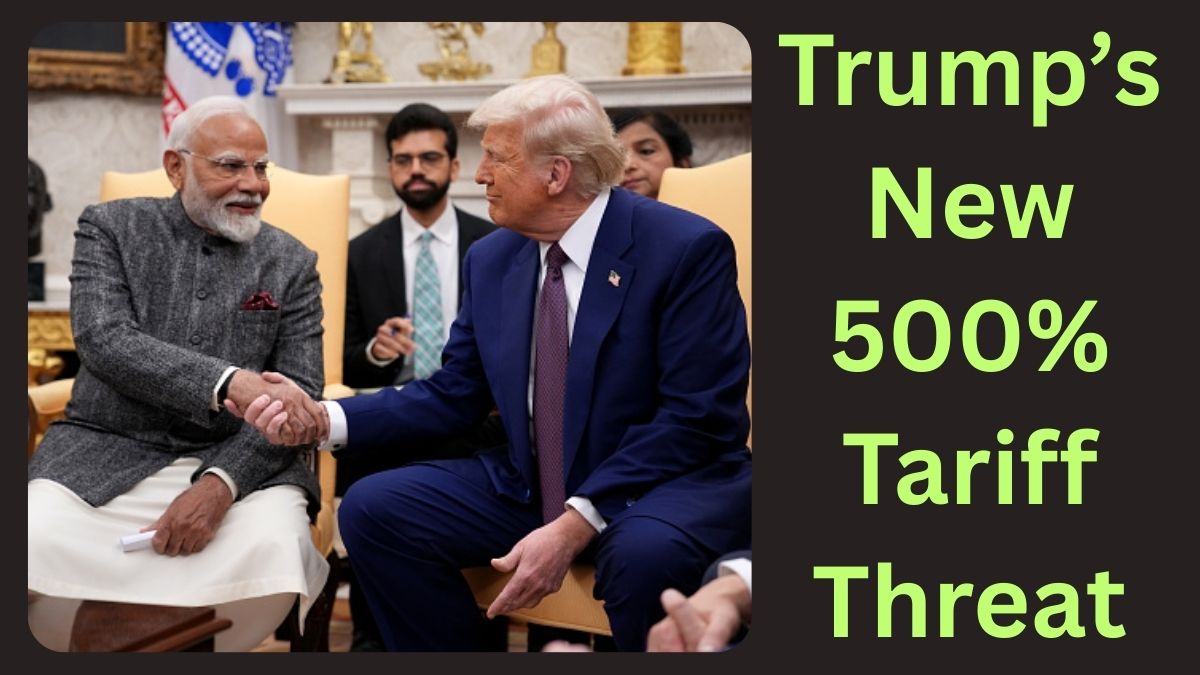
Introduced by US Senators Lindsey Graham and Richard Blumenthal, this bill aims to exert economic pressure on nations that strengthen the Russian economy by purchasing its oil, gas, or uranium.
If this bill becomes law, it would grant the US President the authority to impose:
- Massive tariffs of up to 500%
- Secondary sanctions
The goal is to economically weaken Russia’s capacity to fund its war efforts.
Trump’s Green Light and US Signals
According to Senator Graham, Trump expressed support for the bill during a meeting at the White House. He believes that while Ukraine is taking steps toward peace, Russia continues its offensive. Consequently, this strict legislation is seen as a move brought forward at the “right time.”
Although the bill has not yet been passed, voting is expected to take place in the coming weeks.
ALSO READ | Trump Tariffs Face Resistance: Strong Pro-India Voice Rises in US Congress
Why is this issue critical for India?
India is among the prominent nations that have increased Russian oil purchases in recent years. The reason is simple: ensuring energy security and providing fuel at affordable rates for its citizens.
Potential impacts of this bill include:
- Strain on India-US trade relations.
- Increased challenges for Indian exporters.
- Renewed global scrutiny of India’s energy policy.
India’s Firm Stance
India has consistently maintained a strong position against such external pressures. The government had already clearly stated:
- India’s energy policy is based on national interest and the needs of its people.
- Oil purchases are an economic decision, not a political endorsement.
- India will not compromise on its strategic autonomy.
This balanced approach is precisely what gives India a distinct identity in global politics.
Reasons for Hope Amidst Concerns
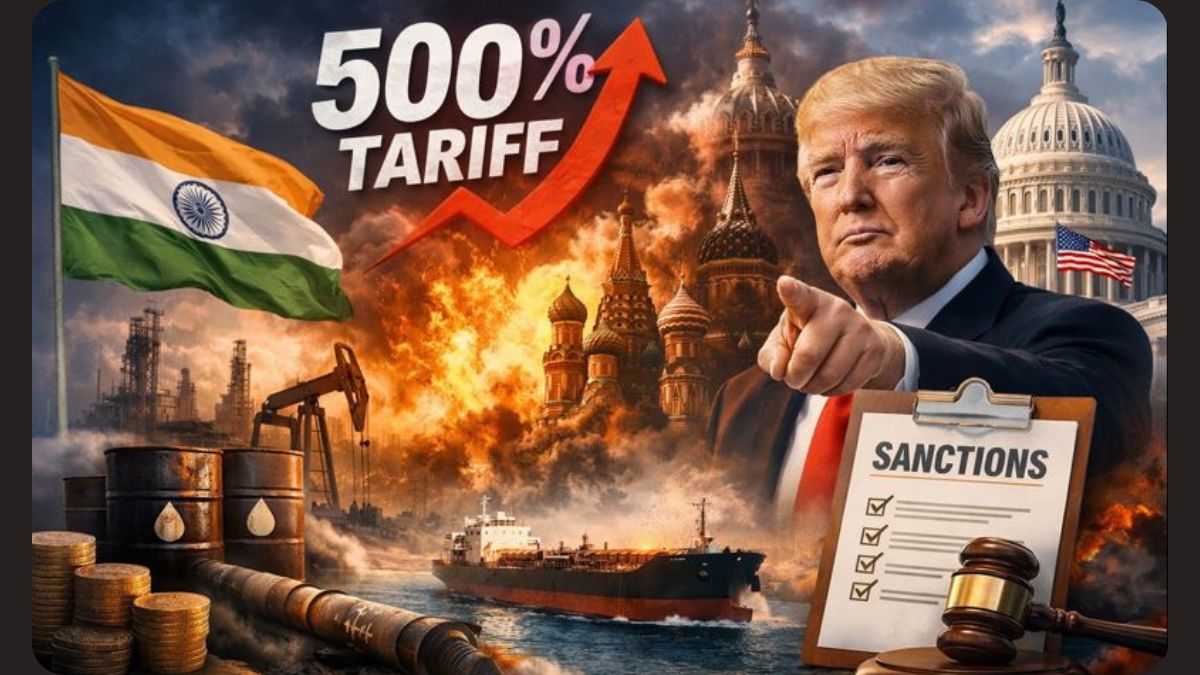
While the talk of a 500% tariff sounds alarming, many experts view it as a US “negotiating tactic.” The India-US relationship is not limited to trade; it is a deep partnership spanning defence, technology, and diplomacy.
Conclusion
This bill serves as a warning, but India’s confidence and historical track record show that it makes decisions based on wisdom rather than pressure. Time will tell if this bill becomes a reality or remains a tool for strategic leverage.
Disclaimer:
This article is based on public news sources and official statements. Its purpose is for informational use only. The views expressed do not constitute a forecast of policies, which may change over time.

Dr. Bidyut Barun Sarmah, with 22+ years of experience in print, electronic, and digital media, holds an MA and PhD in Mass Communication and Journalism. He has worked with AIR, Doordarshan, and the Publication Division under the Ministry of Information and Broadcasting. A published author and researcher, Dr. Sarmah writes extensively in both Assamese and English. He was also awarded a prestigious fellowship by the Ministry of Culture, Government of India, for his study on journalistic literature—an achievement that highlights his depth of scholarship and contribution to media studies. At Nest of News, he leads the editorial team and contributes across diverse topics.