
|
Getting your Trinity Audio player ready...
|
Some moments fill our hearts with pride, and ISRO has gifted us another one. During an inspiring address, ISRO Chairman V. Narayanan confirmed that Chandrayaan-4, India’s next major moon mission, is being prepared for launch in 2028.
Speaking to young graduates at the 15th Convocation of Vel Tech Rangarajan Dr. Sagunthala R&D Institute of Science and Technology on November 29, the Chairman described the mission with warmth, passion, and a clear message: India’s space future is brighter than ever.
Chandrayaan-4 Mission 2028: A Historic Sample-Return Journey
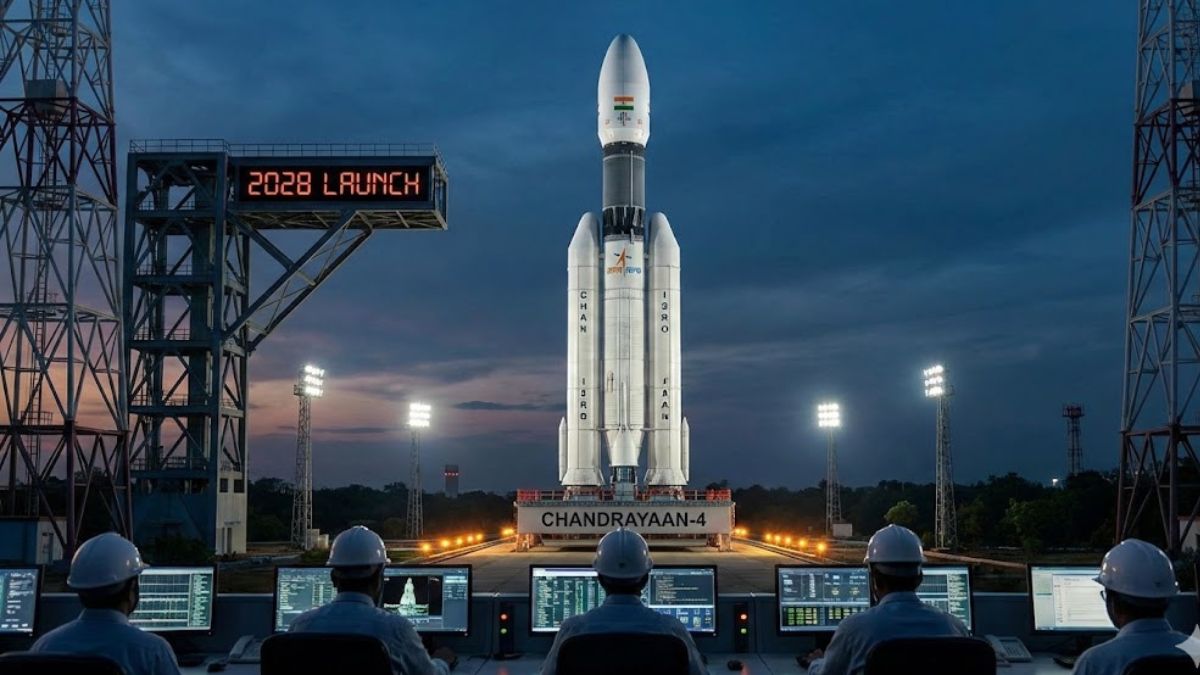
ISRO’s upcoming Chandrayaan-4 aims to accomplish a milestone that only a handful of nations have achieved — bringing back samples from the Moon.
The mission will land a rover on the lunar surface, collect moon soil and rock samples and also return them safely to Earth for advanced scientific analysis
Japan is a valuable partner of India for this ambitious programme, which will strengthen global collaboration in space.
Dr. Narayanan highlighted how massive this mission is compared to its predecessor:
- The Chandrayaan-4 lander will weigh 6,800 kg, a huge leap from Chandrayaan-3’s 1,600 kg
- The new rover will weigh 350 kg, up from only 25 kg earlier
The hall erupted in applause as students realised the extraordinary scale of India’s next big step.
ALSO READ | ISRO Launches Its Heaviest Satellite CMS-03 Today: A Giant Leap for India’s Space Power
India’s Own Space Station Will Be Ready by 2035
ISRO is also working on a dream that once felt distant — a fully indigenous 52-tonne Indian Space Station, expected to be completed by 2035. This project, funded entirely by the Government of India, aims to position India among the world’s most advanced space-faring nations.
Moon Mission by 2040
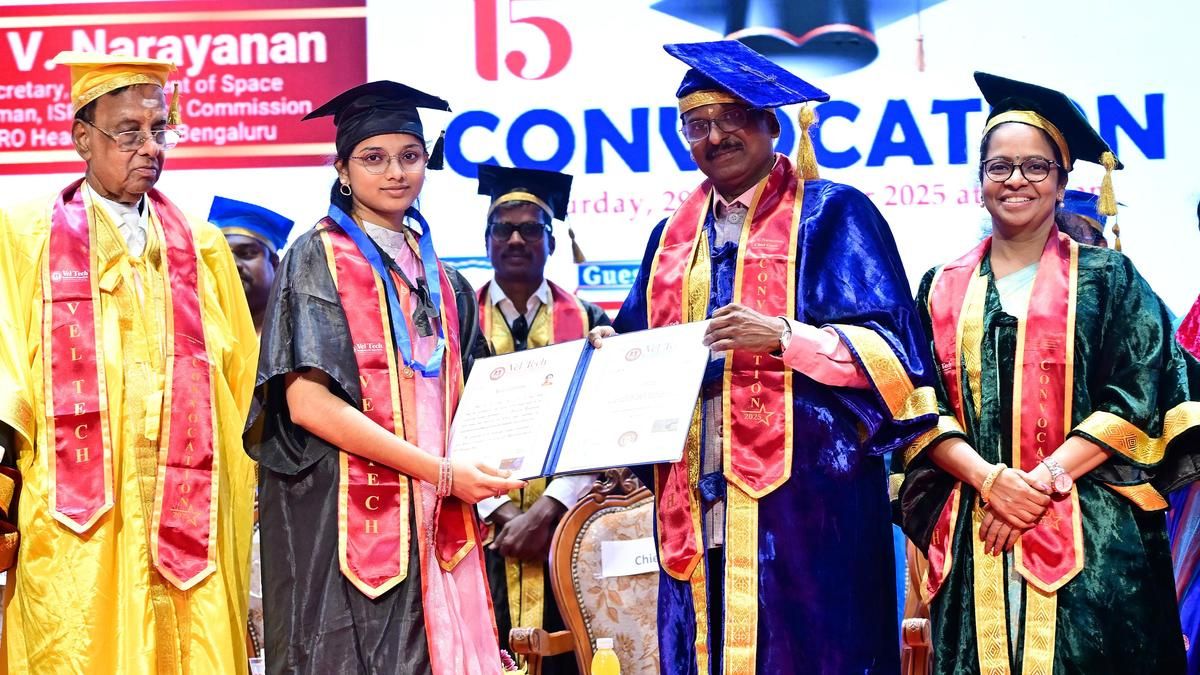
During the interaction,Dr. Narayanan also revealed that ISRO hopes to send Indian astronauts to the Moon by 2040. Engineers are developing a monumental rocket “as tall as a 40-storey building,” to fulfil this dream. The statement filled the room with excitement — a glimpse of India’s bold vision for decades ahead.
57 Indian Satellites Powering the Nation
India currently operates 57 satellites, silently supporting everyday life across the country. These satellites contribute to:
- TV broadcasting
- Tele-education and telemedicine
- Real-time train tracking
- Disaster warning and response
- Weather forecasting
- Sea fishing advisory support
One of the most touching insights shared was about India’s fishermen. ISRO satellites guide nine lakh fishermen every day, identifying fishing zones and helping generate an astounding ₹25,000 crore annually — nearly double ISRO’s own yearly budget.
Over 10,000 Trains Already Linked
More than 10,000 trains in India now run with real-time satellite connectivity. ISRO plans to expand this system to cover all trains, ensuring safer, modern, and more efficient travel.
A Future Among the Stars
Chandrayaan-4, the Indian Space Station, and a future manned Moon mission time and again make it clear that India is no longer just participating in the global space race; it is shaping it.
The announcements made by the ISRO Chief reflect the country’s growing confidence, innovation, and unstoppable ambition.
Disclaimer:
This article is based on statements made by ISRO Chairman V. Narayanan during a public event. All information reflects details available at the time of writing. Readers are advised to follow official ISRO announcements for future updates.
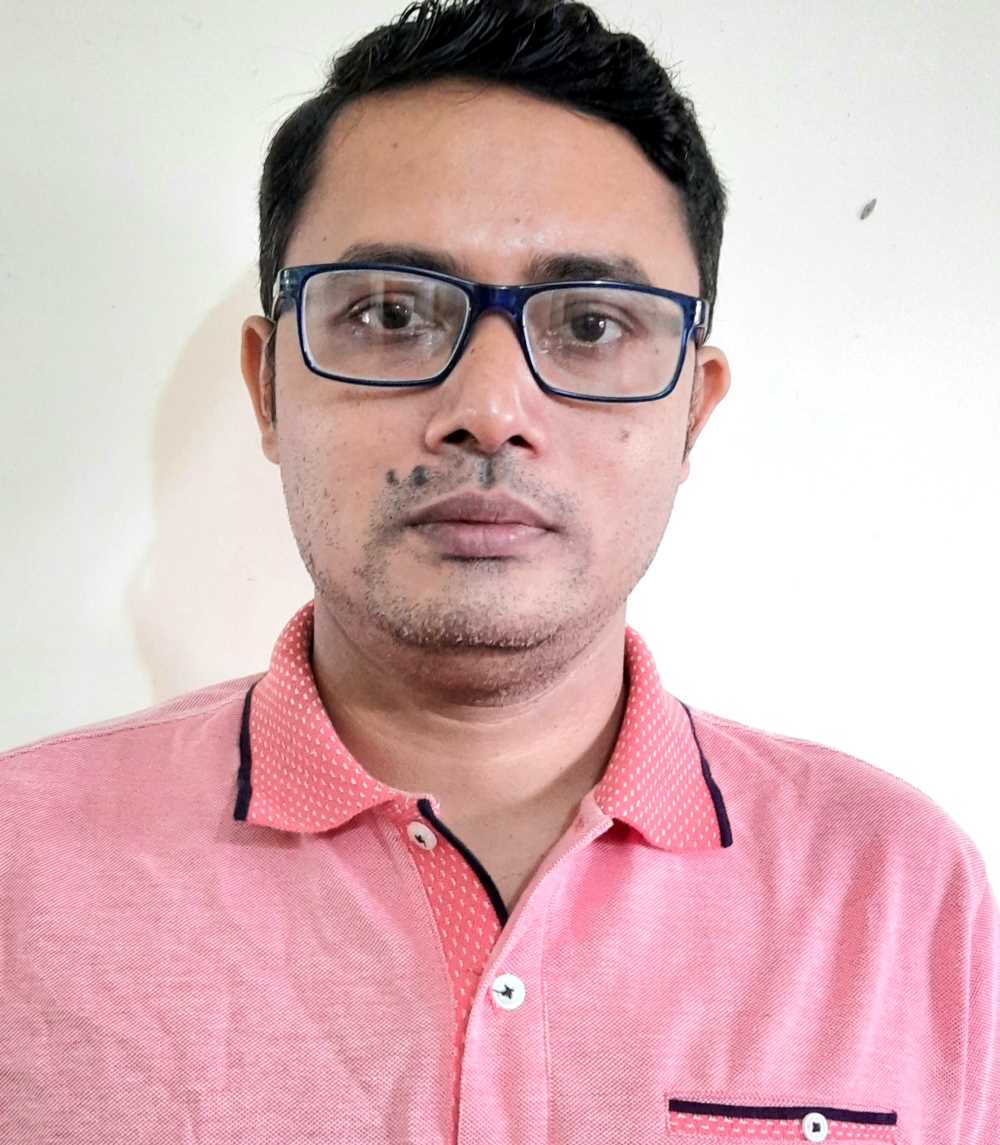
Dr. Bidyut Barun Sarmah, with 22+ years of experience in print, electronic, and digital media, holds an MA and PhD in Mass Communication and Journalism. He has worked with AIR, Doordarshan, and the Publication Division under the Ministry of Information and Broadcasting. A published author and researcher, Dr. Sarmah writes extensively in both Assamese and English. He was also awarded a prestigious fellowship by the Ministry of Culture, Government of India, for his study on journalistic literature—an achievement that highlights his depth of scholarship and contribution to media studies. At Nest of News, he leads the editorial team and contributes across diverse topics.