

|
Getting your Trinity Audio player ready...
|
When a student or professor sits in their small lab and dreams of space, they might not realise that their research could one day become part of the country’s biggest space mission. Now, such a dream is closer than ever before.
Through the RESPOND-2025 Programme, ISRO has invited the country’s universities and research institutions to directly connect with future space campaigns. This initiative is full of promise, but it also raises the question: Can academic research keep pace with the ambitious, fast-paced timelines of ISRO’s missions?
What is the RESPOND-2025 Programme?
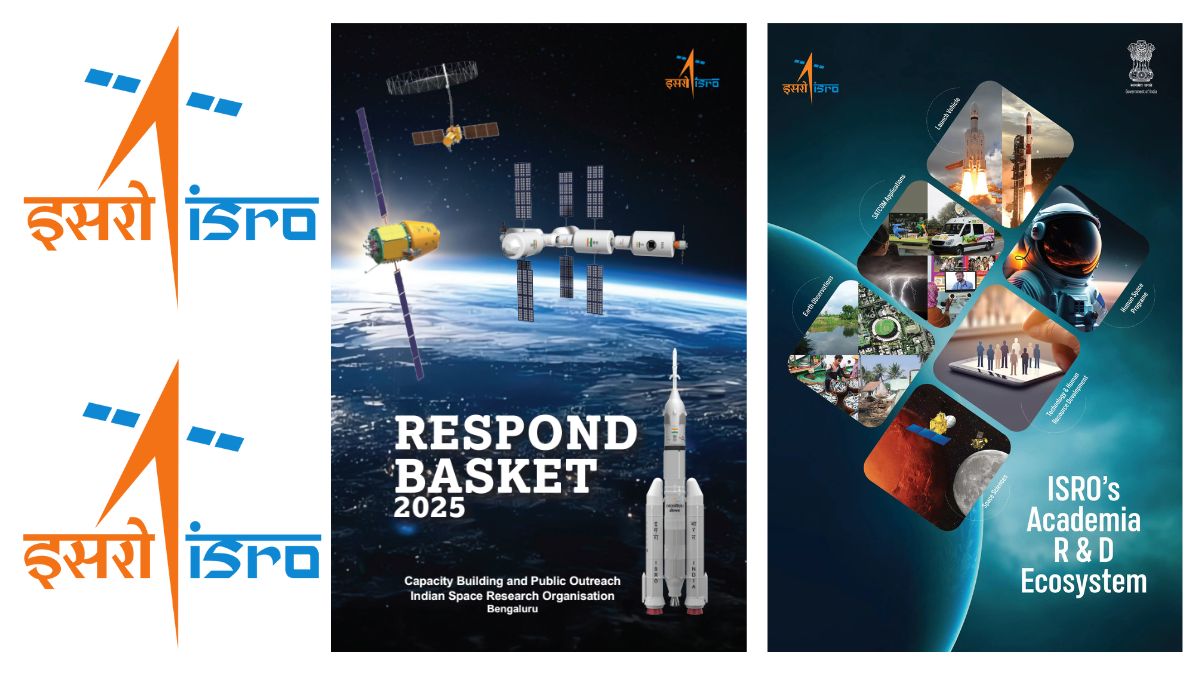
The RESPOND-2025 Programme is the sixth edition of ISRO’s Sponsored Research initiative. Under this, the “RESPOND Basket 2025” has been released, which clearly outlines the research problems and technical needs that will be directly required for ISRO’s upcoming missions.
Under this program, academic institutions will not only get a chance to conduct research, but their work will also have the potential to be used in real space campaigns. The deadline for submitting proposals has been set as January 31, 2026.The submission of these RESPOND BASKET 2025 Proposals will be in “I-GRASP portal”. For any further queries email can be sent at respond@isro.gov.in.
ALSO READ | ISRO Launches Its Heaviest Satellite CMS-03 Today: A Giant Leap for India’s Space Power
What is New in RESPOND-2025 This Time?
In this edition, ISRO has focused not just on theory, but on making prototypes and technology mission-ready. The goal is to move research out of files and into actual systems.
The key research areas include:
- Launch Vehicles and Propulsion Systems
- Satellites, Remote Sensing, and Avionics
- Human Spaceflight and Space Materials
- Planetary Science
- Artificial Intelligence and Quantum Technologies
Direct Linkage with Future Major Missions
According to ISRO, academic cooperation will be crucial for the missions planned in the coming years. RESPOND-2025 has been specifically linked to these campaigns:
- Human Space Missions beyond Gaganyaan
- Chandrayaan-4
- Bharatiya Antariksh Station (BAS)
- Future Lunar and Planetary Missions, including the Venus Orbiter
This means that today’s academic research can become a part of tomorrow’s space history.
ISRO and Academia: Old Relationship, New Responsibility

ISRO initiated the RESPOND Programme back in the 1970s. Since then, universities and research institutions have continuously supported India’s space program.
Since the first RESPOND Basket in 2018, hundreds of research problems have been shared, many of which have been used in ISRO’s operational and experimental missions. RESPOND-2025 aims to elevate this partnership to a new height.
Who Can Apply and How Will Selection Be Done?
Faculty members and scientists from recognized universities, educational institutions, and autonomous research organizations can apply under this Programme.
According to ISRO, proposals will be evaluated based on:
- Novelty and practicality of the research
- Technical approach
- Experience of the Principal Investigator
- Project timeline and budget
The objective of this initiative is not just to solve problems, but also to create a skilled and self-reliant space workforce.
Hopes and Challenges Hand in Hand
RESPOND-2025 is a major opportunity for the Indian academic community. It will provide direction, resources, and national recognition to research.
However, the challenge is that space missions are races against time, while academic research often demands patience and a long duration. Balancing this difference will be the true test of this programme.
Conclusion
The RESPOND-2025 Programme demonstrates that India’s space future is being shaped not only in ISRO’s labs but also in the country’s universities and research institutions. If this collaboration succeeds, India will not only soar in space but will also establish new dimensions of knowledge and innovation.
Disclaimer:
This article is based on publicly available information, official statements and credible news sources. The content has been written for informational and awareness purposes only. While every effort has been made to ensure accuracy, readers are advised to verify details independently if required. Neither the author nor the platform is responsible for any decisions taken based on this article. Readers should visit the concerned official websites or contact official sources before taking any decisions.

Pronita Devi, an M.A. in Political Science, has spent over a decade in electronic and digital media. She regularly contributes insightful articles on geopolitics and current affairs, bringing clarity and depth to complex global issues.