|
Getting your Trinity Audio player ready...
|
For generations, land has meant far more than a place to live for indigenous communities in Northeast India. It represents their identity, culture, traditions, livelihoods and connection with their ancestors. Protecting these ancestral lands is therefore not simply a legal concern, but a matter of preserving a way of life.
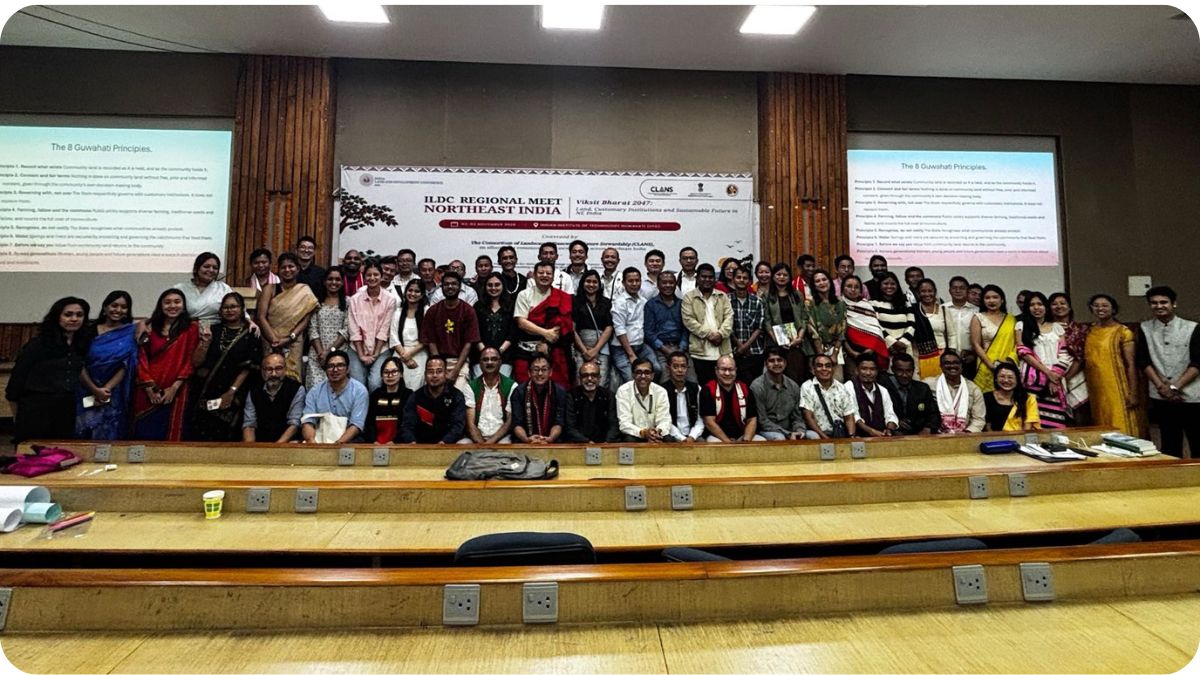
Recognising the importance of this issue, IIT Guwahati hosted an important regional gathering on November 2 and 3, bringing together tribal leaders, traditional authorities, women farmers, young people, researchers and government representatives to discuss land governance and customary institutions.
Organised by the Consortium of Landscape Alliances for Nature Stewardship (CLANS) and hosted by the School of Agro and Rural Technology (SART), the two-day ILDC Regional Meet provided an important platform for indigenous communities to share their experiences, raise concerns and explore practical ways to safeguard their traditional land rights.
The gathering was held under the theme, “Viksit Bharat 2047: Land, Customary Institutions and Sustainable Future in NE India.” It highlighted the need to balance India’s development ambitions with the protection of indigenous traditions, community ownership and environmental sustainability.
Four Major Issues Shape the Regional Discussion
The discussions centred on four important areas that directly affect the future of indigenous communities across Northeast India.
One of the key concerns was the protection of customary land ownership. Participants discussed how traditional land management systems often face challenges when they come into contact with formal laws, development projects and changing governance structures.
Another major issue was the future of jhum cultivation, the traditional rotational farming system practised by several indigenous communities in the region. Delegates highlighted its connection with indigenous knowledge, biodiversity, food security and community life.
The gathering also examined community data sovereignty, focusing on how modern technology and digital tools could help communities document and protect their lands without losing control over their own information.
The fourth area of discussion involved nature-based markets and economic opportunities. Participants explored how communities could benefit from emerging environmental initiatives while retaining their rights over natural resources and receiving fair recognition for their role in conservation.
ALSO READ |Fresh Energy Hope Emerges as IIT Guwahati Explores Rural Solar Solutions
Customary Land Rights and Carbon Markets Raise Important Questions
The first day opened with a plenary session that presented an overview of the region’s landscape and outlined a roadmap for developing a common regional declaration.
One particularly important discussion examined the relationship between customary land ownership and carbon markets. As environmental conservation and carbon-related initiatives gain attention, indigenous communities face an important question: how can they participate in these opportunities without putting their traditional rights at risk?
Delegates discussed the possibility of economic benefits from such initiatives while also raising concerns about commercial exploitation, unclear ownership arrangements and the need for informed community participation.
Parallel sessions explored the importance of jhum cultivation as a shared community resource. Discussions highlighted indigenous seed systems, local food security and the role of traditional agricultural practices in maintaining ecological balance.
Participants also considered community-led monitoring approaches that combine traditional environmental knowledge with modern scientific methods. Such approaches could help local communities monitor forests, understand changes in their surroundings and strengthen their participation in conservation decisions.
Tribal Leaders and Community Members Bring Ground Realities to the Table
The second day, November 3, focused on bringing together the ideas and experiences shared during the previous day’s discussions. An interactive workshop allowed participants to examine common challenges through roundtable conversations and identify shared priorities for the future.
The special inaugural programme began with a welcome address by Prof. Sudip Mitra, Head of the School of Agro and Rural Technology at IIT Guwahati. Mr Pranab Choudhury from the ILDC Secretariat and Mr Amba Jamir representing CLANS shared their perspectives on community stewardship and the importance of strengthening traditional institutions.
One of the most meaningful parts of the gathering was the session titled “Voices from the Commons”. Local community members shared personal experiences, concerns and hopes relating to their lands, livelihoods and traditional practices.
Their contributions brought a human perspective to discussions that are often dominated by legal provisions, policy documents and technical terminology.
Ms Daiophika Thangkiew from FES delivered the vote of thanks, bringing the formal programme to a close. Prof. Devendra Jalihal, Director of IIT Guwahati, also interacted with delegates, listened to community representatives and observed the roundtable discussions.
ALSO READ |Bhutanese Students Explore Innovative Technologies and Confront Rural Challenges at IIT Guwahati
Sixth Schedule, Land Acquisition and Digital Mapping Under Discussion
Beyond customary ownership and environmental conservation, the regional meet addressed several sensitive governance issues affecting indigenous communities. Technical discussions examined land acquisition pressures, community displacement and constitutional safeguards available under the Sixth Schedule.
These issues are particularly important in Northeast India, where traditional institutions and customary practices continue to play a significant role in community affairs and land management. Participants also discussed digital spatial mapping as a possible tool for documenting traditional territories and strengthening community participation in land-related decisions.
However, the discussions also highlighted the importance of ensuring that technological interventions respect local knowledge, community consent and the rights of indigenous people. The central concern was clear: development and modern governance should not weaken the traditional institutions that have helped communities manage their resources over generations.
Women Farmers and Indigenous Products Highlight Local Strength
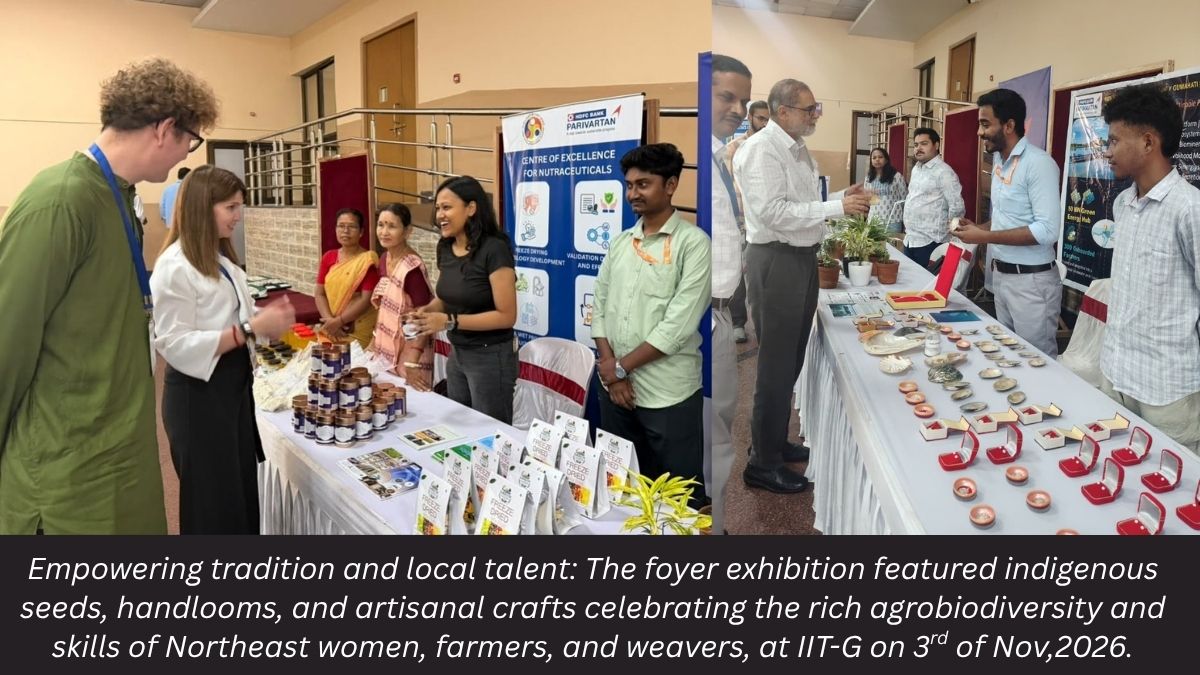
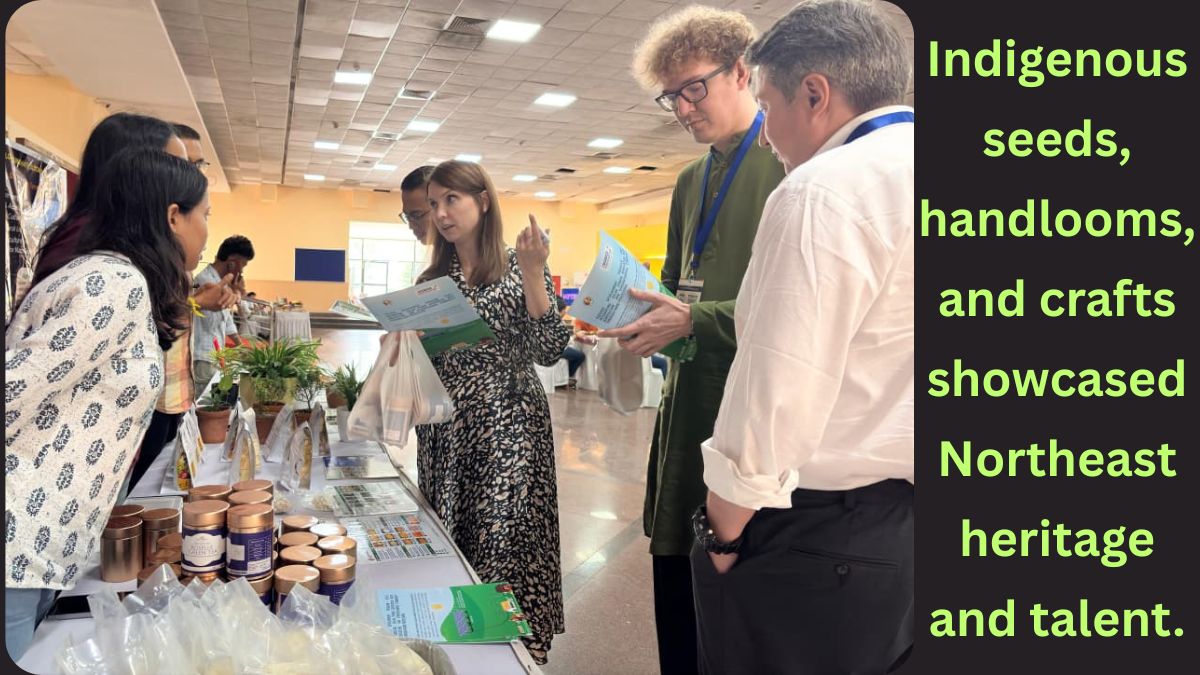
The regional meet also celebrated the cultural and economic contributions of local communities through an exhibition arranged in the venue’s foyer. Visitors were introduced to collections of native seeds, traditional handloom products and organic regional food items.
The exhibition highlighted the skills and contributions of women weavers, farmers and small-scale producers, whose work plays an important role in sustaining rural economies and preserving indigenous knowledge.
It also offered an opportunity to recognise that sustainable development is not limited to large infrastructure projects or economic policies. It can also grow through local enterprises, traditional skills, agricultural knowledge and community-based livelihoods.
For many indigenous communities, protecting land is closely connected with protecting these everyday sources of income, identity and cultural continuity.
IIT Guwahati’s Role in Advancing Northeast India
Hosting the regional meet further highlighted IIT Guwahati’s engagement with issues that extend beyond conventional science and technology education.
Established in 1994 as the sixth Indian Institute of Technology, the institution began its academic activities in 1995. Located on a green campus along the Brahmaputra River, it has developed into an important centre for education, research and innovation in Northeast India.
The institute has eleven departments, five specialised academic schools and seven interdisciplinary academic centres. Its academic programmes cover undergraduate, postgraduate and doctoral education across several disciplines. Over the years, IIT Guwahati has also earned recognition in national and international academic rankings.
Its achievements include recognition in the Times Higher Education rankings for young universities in 2014, strong performance in research citations and a notable presence in the QS World University Rankings 2024.
The institute has also received recognition for its work in sustainability, including its performance in the Times Higher Education Impact Rankings 2023. By bringing together researchers, policymakers and grassroots representatives, IIT Guwahati continues to provide an academic platform for conversations around regional development and social challenges.
A Shared Hope for Stronger Indigenous Land Governance
The ILDC Regional Meet concluded on November 3 with an important message about the future of land governance in Northeast India.
The discussions demonstrated that protecting customary land rights requires more than legal recognition. It also demands meaningful community participation, stronger traditional institutions, respect for indigenous knowledge and fair access to emerging economic opportunities.
For tribal communities, ancestral land carries memories, responsibilities and traditions that cannot easily be measured in economic terms. Any development approach that overlooks these connections risks leaving the people most closely associated with the land out of important decisions.
The regional gathering at IIT Guwahati offered an opportunity to bring these voices together and identify common priorities.
As participants returned to their respective communities, the challenge ahead remained significant. Turning discussions into practical action will require continued cooperation among indigenous institutions, researchers, civil society organisations and government authorities.
Ultimately, sustainable land governance in Northeast India will depend on ensuring that the communities who have protected their lands for generations remain central to decisions about their future.
Disclaimer:
This article is published for general informational and educational purposes based on information about the regional gathering and its discussions. The views and perspectives attributed to participants and organisations reflect their contributions to the event and should not be interpreted as official government policy or legal advice. Customary land rights, ownership arrangements and constitutional protections may vary across communities and jurisdictions. Readers should consult relevant legal provisions, official government notifications and qualified authorities for clarification on specific land-related matters.

Pronita Devi, an M.A. in Political Science, has spent over a decade in electronic and digital media. She regularly contributes insightful articles on geopolitics and current affairs, bringing clarity and depth to complex global issues.