
|
Getting your Trinity Audio player ready...
|
Imagine waking up, scrolling through social media and reading angry comments about your electricity bill, comments that sound just like your neighbour, your coworker or even your cousin. Now imagine finding out those voices were never real. They were created thousands of miles away, in China, using AI to fool you. This is exactly what OpenAI just uncovered and it is honestly a bit unsettling.
What Really Happened

OpenAI, the company behind ChatGPT, recently banned hundreds of accounts that were secretly operating from China. These accounts were not just spamming random content. They were carefully crafted to look like real Americans, complete with different ages, jobs and backgrounds, all designed to blend into everyday online conversations.
Their target? The China data centre debate, a hot topic involving AI, electricity prices and US technology policy.
ALSO READ |“Data Centres May Not Survive”: Aravind Srinivas Warns of AI Shift, Sees Hope in On-Device Future
The Data Centre Bandwagon Campaign
One group of accounts, which OpenAI named the Data Centre Bandwagon campaign, focused on a very relatable fear, rising electricity bills.
These fake accounts used ChatGPT to generate comic strips and short comments claiming that AI data centres were the real reason behind expensive power bills. They even referenced real news articles about power grid pricing to make their claims feel more believable. It is a clever tactic, taking something true, like rising energy costs, and twisting it to fit a narrative.
The Tech and Tariffs Campaign
The second group, called the Tech and Tariffs campaign, took a different approach. These accounts criticised US tariffs, framing them as attempts by America to dominate global tech competition.
What is interesting is that the prompts specifically avoided mentioning China’s leadership and instead focused entirely on President Trump. This is not an accident; it is strategic storytelling designed to shape opinions without raising suspicion.
This same network was also linked to false claims that ChatGPT user data had been hacked, claims that OpenAI confirmed were completely untrue.
Did It Actually Work
Here is the part that might bring you a little relief. Despite all this effort, planning and clever prompting, OpenAI’s report revealed that the campaign generated almost no real engagement. Genuine users did not fall for it in large numbers. So, while the attempt was sophisticated, it largely failed. And honestly, that is reassuring.
Why This Story Matters to You
You might be wondering, ” Why should I care about fake accounts from another country?
The truth is, these campaigns are designed to influence how people feel about important topics, from energy prices to government policies. If enough people believe a false narrative, it can shape public opinion and even impact decisions made by lawmakers.
This incident is a wake-up call. It shows just how creative and persistent these influence operations can be, using AI tools meant for productivity to instead spread division and confusion.
ALSO READ |OpenAI’s GPT-5.5 Can Think for Itself Now, and That Should Get Everyone’s Attention
The Silver Lining
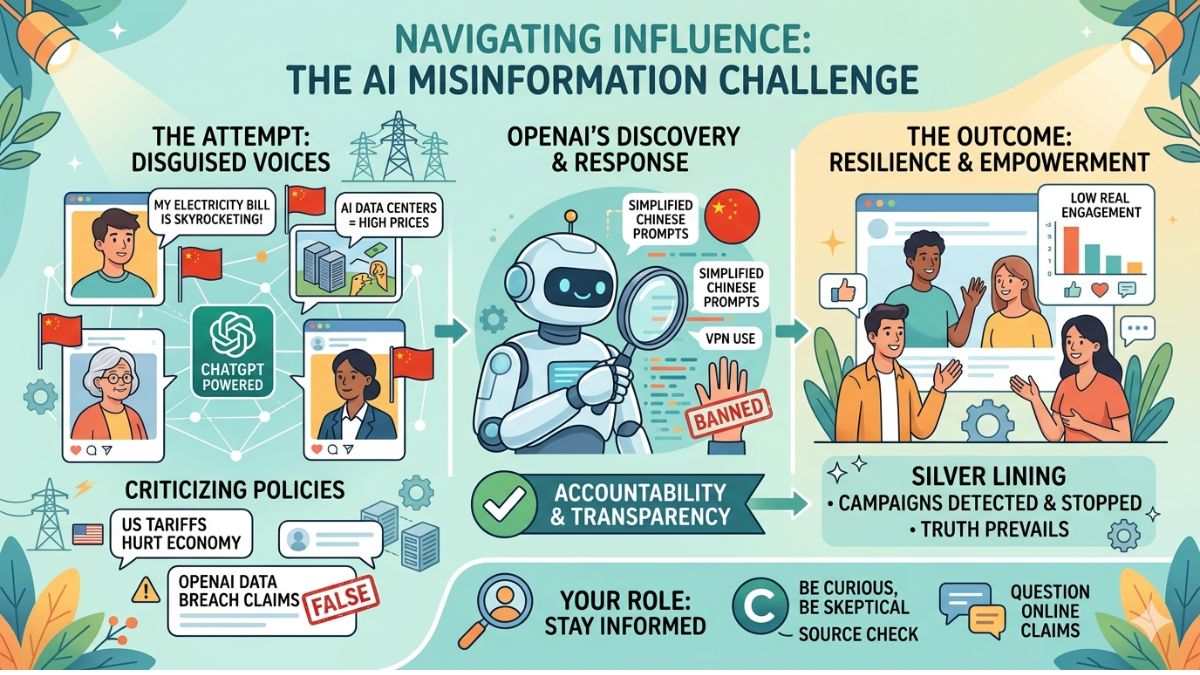
There is a positive side to this story, too. OpenAI was able to detect unusual patterns, like prompts written in Simplified Chinese, VPN usage and coordinated posting behaviour, and act quickly. Their transparency in sharing this report shows accountability, something the AI industry desperately needs right now.
It also proves that even the most carefully designed influence campaigns can be caught and stopped before they cause real damage.
What You Can Do
Next time you see a viral post about electricity bills, tariffs or AI policies, take a moment. Ask yourself, who is really behind this account? Is this claim backed by a credible source? Staying curious and a little sceptical is one of the best ways to protect yourself from misinformation, especially as AI tools become more powerful and accessible.
ALSO READ |China Conducted Nuclear Test After Galwan Clash, US Makes Explosive Claim
Final Thoughts
This story is a mix of emotions, frustration that someone tried to manipulate public opinion, but also hope, because the attempt failed and the truth came out. As AI continues to shape our world, stories like this remind us how important it is to stay informed, stay alert and always question what we see online.
Disclaimer:
This article is based on information from OpenAI’s official threat report and publicly available sources. It is intended for informational purposes only and reflects the details available at the time of writing. Readers are encouraged to verify facts independently and refer to official OpenAI publications for complete and updated information.
Paban Kotoky, an MCA by qualification, serves as the Technical Head & Contributor at NestOfNews.com. He manages the overall technical operations of the platform and also contributes regularly, sharing his expertise on technology and emerging digital trends.