
|
Getting your Trinity Audio player ready...
|
The mood among everyday investors in India feels a little different this year. The excitement that once drove millions to open trading apps daily is now showing signs of cooling. The latest data reveals that the NSE active investors drop has become a talking point across Dalal Street, raising questions about where retail participation is headed next.
For many small investors, the stock market was not just about money but also hope, ambition, and financial independence. So, when numbers fall this sharply, it reflects more than just statistics; it reflects changing emotions.
What Led to the Sharp Drop in NSE Active Investors

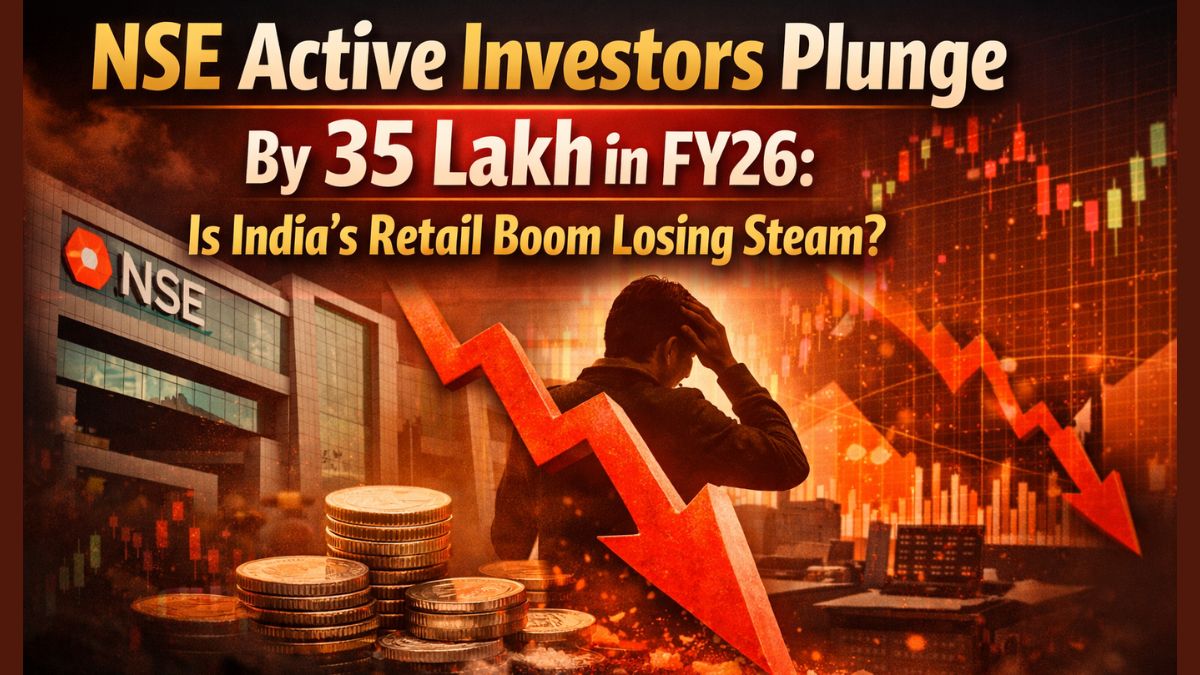
The National Stock Exchange of India witnessed a decline of nearly 35 lakh active investors in FY26, marking the steepest fall in recent years. After a strong growth phase, this sudden dip has taken both analysts and brokerages by surprise.
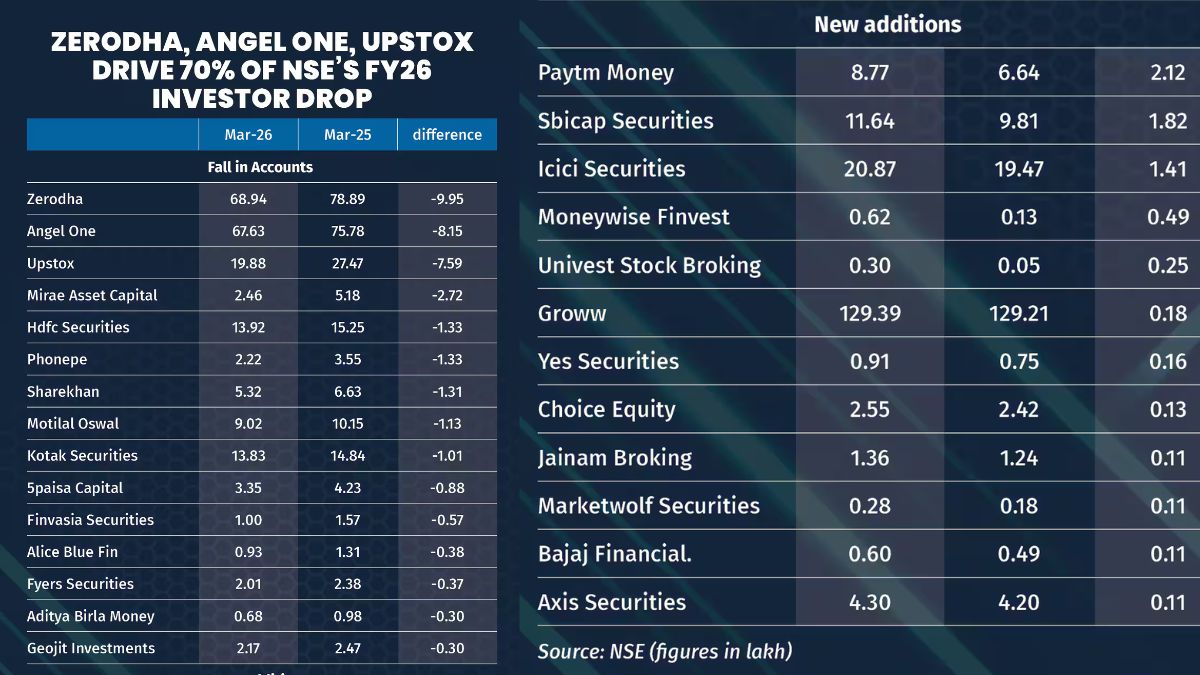
A large part of this decline came from major discount brokers like Zerodha, Angel One, and Upstox, where a significant number of users turned inactive. But this is not just about platforms losing clients. It reflects a broader shift in how people are approaching the market.
ALSO READ |Indian Markets Set to Go Supersonic as NSE Nanosecond Trading Revolution Begins on April 11
Why Retail Investors Are Stepping Back
The reasons behind this slowdown are layered and deeply connected to both market conditions and investor psychology.
Many retail investors entered during the bull run, when stocks seemed to rise effortlessly. Today, the environment feels very different. High valuations, unpredictable movements, and global uncertainties have made people more cautious.
Another key factor is disappointment. Several IPOs that once generated huge excitement failed to deliver expected returns. For first-time investors, this created doubt and hesitation. Frequent hikes of charges like STT, STCG, LTCG also have discouraged many small and retail investors and traders.
At the same time, stricter rules in derivatives trading reduced opportunities for quick profits, which were a major attraction for short-term traders. Rising global tensions and oil prices added to the uneasy sentiment, making investors pause and rethink.
A Shift in Behaviour, Not Just a Decline
While the headline number shows a drop, the deeper story is about change, not exit. Many investors have not left the market entirely. They have stopped trading frequently. Some are waiting for stability, while others are becoming more thoughtful about where they put their money.
Interestingly, a few platforms like Paytm Money and ICICI Securities have managed to attract new users. This shows that investors are becoming selective, choosing platforms that offer better trust, tools, or guidance.
What This Means for India’s Stock Market
The fall in active investors may feel worrying in the short term, but it could also be a sign of maturity.
Markets driven purely by excitement can be fragile. A more cautious investor base may bring stability and long-term growth. Instead of chasing quick gains, more people could focus on fundamentals and disciplined investing.
However, there are challenges too. Lower participation can reduce trading volumes and impact brokerage revenues. It may also slow down the momentum that retail investors brought to the market in recent years.
ALSO READ |NSE IPO : SEBI Chief Tuhin Kanta Pandey Shares Fresh Clarity on Listing Process
The Road Ahead for Retail Investors
This phase may simply be a pause, not a full stop. India’s financial story is still growing, and the interest in equity markets is unlikely to disappear. As conditions improve and confidence returns, many of these inactive investors could come back stronger and wiser.
For now, the NSE active investors drop is a reminder that markets move in cycles, and so do people’s emotions.
Disclaimer:
This article is for informational purposes only and should not be considered financial or investment advice. Market investments are subject to risks, and readers are advised to consult certified financial experts before making any investment decisions.

Dr. Bidyut Barun Sarmah, with 22+ years of experience in print, electronic, and digital media, holds an MA and PhD in Mass Communication and Journalism. He has worked with AIR, Doordarshan, and the Publication Division under the Ministry of Information and Broadcasting. A published author and researcher, Dr. Sarmah writes extensively in both Assamese and English. He was also awarded a prestigious fellowship by the Ministry of Culture, Government of India, for his study on journalistic literature—an achievement that highlights his depth of scholarship and contribution to media studies. At Nest of News, he leads the editorial team and contributes across diverse topics.
1 thought on “NSE Active Investors Drop Sparks Concern Across Markets as Retail Participation Slows”
Comments are closed.