
|
Getting your Trinity Audio player ready...
|
Some stories hit you before you are ready for them. The story of how an Odisha man carries sister’s skeleton to bank to withdraw money is exactly that kind of story. It does not belong in the category of crime. It does not belong in the category of horror.
It belongs somewhere quieter and more painful than either. It belongs in the long, unfinished chapter of what this country still owes its poorest people.
Jitu Munda is 55 years old. He lives in Dianali village in Odisha’s Keonjhar district, a small and unremarkable place far from the noise of cities, courts and legal offices. His sister Kakra Munda died two months ago. Her husband had already passed.
Her only child was gone, too. When Kakra left this world, she left behind one person who loved her and one bank account with Rs 19,300 in it. That money was hers. She had saved it. And Jitu, the only family she had left in the world, wanted to make sure it was not forgotten along with her.
He Walked Into a bank, and No One Knew What to Say
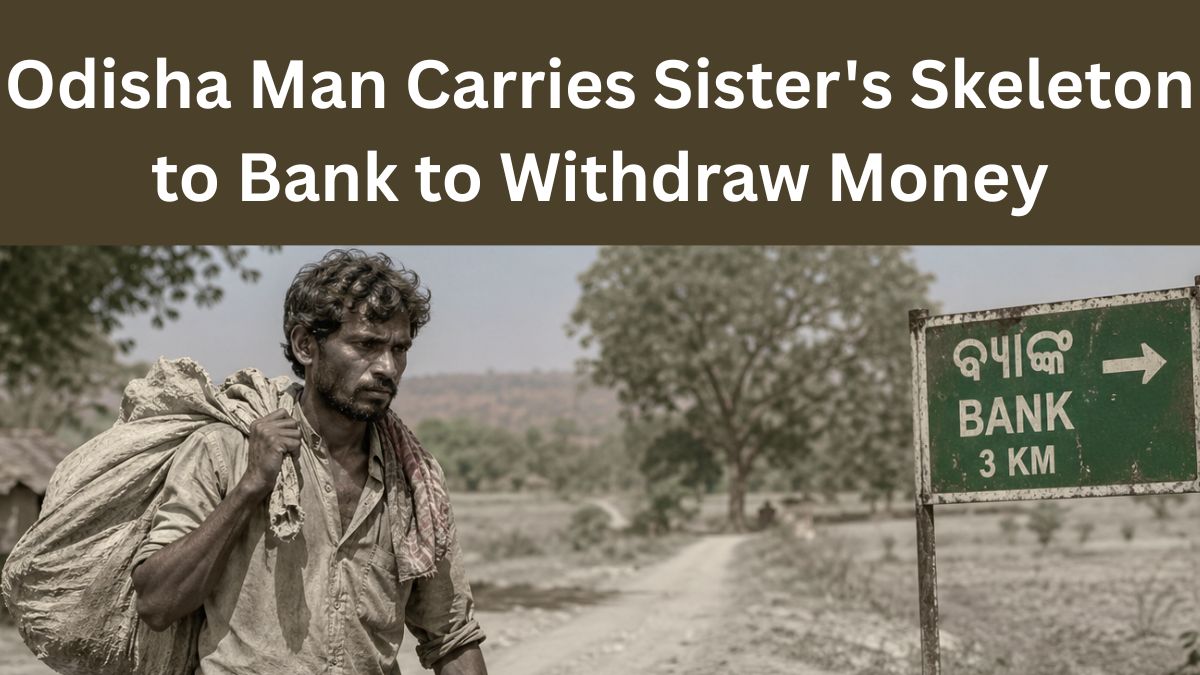
When the Odisha man who carried his sister’s skeleton to the bank first visited the Odisha Gramin Bank branch at Mallipasi after Kakra’s death, he was told to bring documents. Legal heir certificate. Death certificate. Succession papers.
The bank manager explained that either the account holder had to be present or the claimant had to submit proper paperwork before any withdrawal could be processed. Jitu listened. He nodded. And then he went home completely lost.
He had never been to school. He had no idea what a legal heir certificate was or where one came from. He did not know which office to visit, which form to fill or which official to speak to. Nobody in his village stepped forward to guide him through the process.
He was a man standing in front of a locked door with no key and no map.So, on Monday morning, April 27, 2026, he made a decision that would shock an entire country.
The Walk That Broke Every Heart That Heard About It
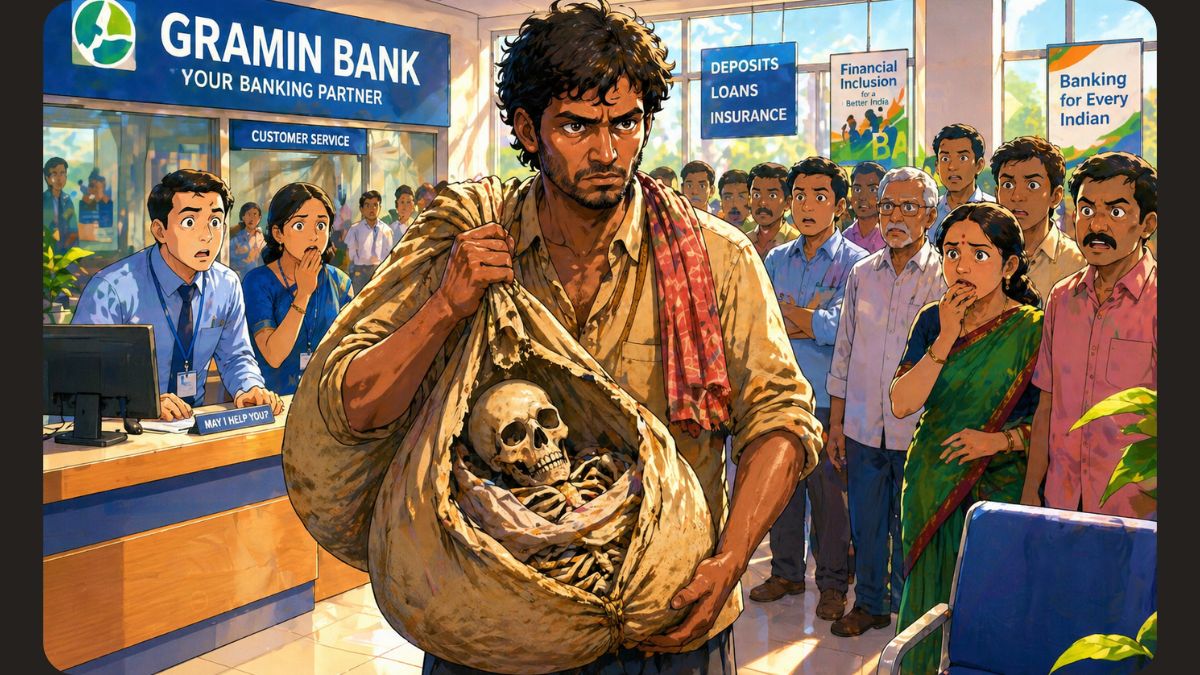
Jitu went to the village cremation ground. He dug up his sister’s remains. He wrapped her skeleton carefully in a cloth, placed it in a sack, lifted it onto his shoulder and walked three kilometres through the blazing April heat to the bank.
In his mind, he was solving the problem. The bank wanted proof that Kakra was dead. He would bring them proof they could not argue with. He was not trying to cause a scene. He was not making a political statement. He was a grieving brother who had run out of every other idea and was doing the only thing left that made sense to him.
When he walked through the bank door, the room went silent. Customers stared. Staff could not speak. Some people in the crowd began to cry. Others felt a sharp anger rising in their chests, not towards Jitu but towards the years and systems and silences that had brought him to this moment.
This is what happens when a man has nothing left to offer but the truth, and the truth is a skeleton in a sack.
Rs 19,300 and a Lifetime of Being Left Behind
Let that number sit with you for a moment. Rs 19,300. That is the amount at the centre of this entire story. It would not cover a single night in a decent city hotel. It would not buy a new smartphone. But for Jitu Munda and for the memory of his sister Kakra, it represented something real. Something she had worked for. Something that deserved to be claimed with dignity.
The Odisha man who carried his sister’s skeleton to the bank was not being irrational. He was being desperate. And desperation, when it has nowhere left to go, finds its own logic.
Kakra had no one else. Her husband was dead before her. Her child was gone. Jitu was her last thread to the living world, and he was trying, with everything he had, to honour what little she left behind.
The Village Watched, and the Village Was Furious
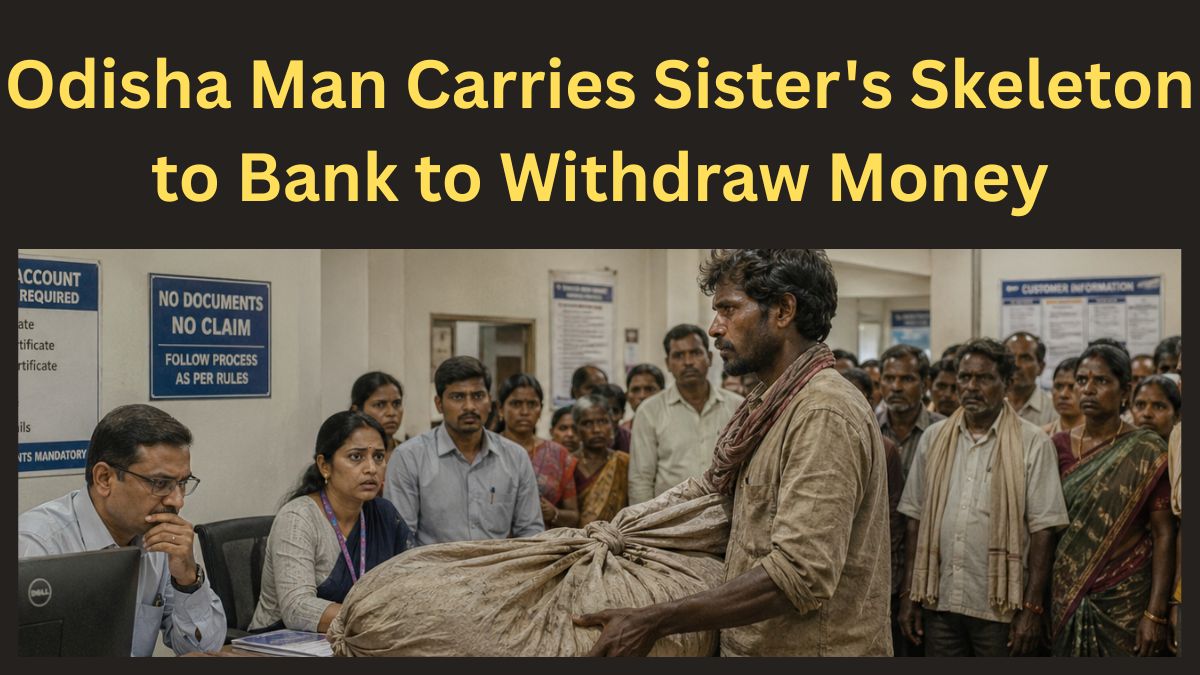
When word spread about what had happened, the reaction in the surrounding community was immediate and raw. Villagers did not blame Jitu. They blamed a system that treated a poor tribal man’s grief as an inconvenience requiring paperwork.
People asked out loud why the bank could not have sent someone to the village. Why does no one think to verify Jitu’s claim through the local Sarpanch? Why was a field visit or a simple conversation with village elders never considered? Instead of compassion, the process demanded compliance. And compliance required documents that a man with no education and no guidance simply could not produce.
“Is it this hard for a poor man to get his own money?” one villager reportedly asked. That question does not have a comfortable answer.
ALSO READ |Ayushman Card Claim Gets Faster, Say Goodbye to Long Waiting After Treatment
What the System Got Right and What It Got Terribly Wrong
To be fair, banks have rules around deceased accounts for genuine reasons. Fraud is real. Disputes between family members over inheritance are real. The documentation process exists to protect people as much as it inconveniences them.
But rules do not exist in a vacuum. They exist among human beings, in communities, in contexts. And the context here was a tribal man with no literacy, no support network and no understanding of formal procedures, trying to claim a modest sum on behalf of a sister with no surviving family.
The bank could have reached out. The block administration could have posted information about legal heir procedures in local languages years ago. A single community outreach programme might have meant that Jitu Munda knew exactly where to go and what to do. None of that happened.
So the Odisha man who carried his sister’s skeleton to the bank did what he had to do, and the nation watched in stunned silence.
Police Stepped In and Offered What the Bank Did Not
After someone alerted the local police from Patna police station, officers arrived and handled the situation with a degree of sensitivity the moment called for. They spoke to Jitu calmly. They explained the proper process without making him feel foolish for not knowing it. They assured him his case would be handled on humanitarian grounds.
Jitu later returned to the cremation ground and reburied his sister’s remains. Authorities in the Patna block have since confirmed that they will assist him in obtaining a legal heir certificate and all necessary documents so he can finally withdraw the Rs 19,300 that Kakra saved in her lifetime.
It should not have taken a skeleton to make that promise happen. But it did.
India’s Financial Inclusion Dream and the People Still Waking Up to It
India has done remarkable work in extending banking access to its poorest citizens over the last decade. Millions of accounts have been opened in villages that never had a bank branch within walking distance. Digital payments have transformed daily commerce in towns and cities. These are achievements worth acknowledging.
But opening an account is only the first step. What happens next, when the account holder dies, when a nominee has not been registered, when the surviving family member has no education or legal knowledge, that is where the story often ends badly.
Kakra Munda had a bank account. That was progress. But the system that gave her that account never prepared her brother for the day she would be gone. It handed her a door and forgot to give anyone the key.
ALSO READ |EPFO 3.0 PF withdrawal rules: Now, withdrawing PF via ATM and UPI is extremely easy
Jitu Munda Deserves More Than a Promise
The authorities have said the right things. The police responded with humanity. The block administration has pledged to help. These are good signs, and Jitu will hopefully receive that Rs 19,300 before too many more weeks pass.
But Jitu Munda is one man in one village. There are thousands of villages across India where someone just like him is sitting with a dead relative’s passbook, a head full of grief and no idea where to begin. They will not make the news.
They will not prompt a police response or a block administration pledge. They will simply wait, and the money will sit unclaimed, and the system will keep turning without noticing the people it has left behind.
The Odisha man who carried his sister’s skeleton to the bank gave the rest of us a gift we did not ask for. He made us look directly at something we prefer not to see. He reminded us that inclusion is not a policy announcement. It is the moment a man walks three kilometres in the heat and still knows exactly what to do when someone he loves dies.
Jitu Munda did not know what to do. And that is on all of us.
Disclaimer:
This article has been written based on publicly available information. Readers are encouraged to refer to official sources for legal procedures related to deceased bank accounts. The views expressed are journalistic in nature and do not represent legal or financial advice.
Kangkan Kishor Sharma, an M.A. in Media and Journalism, serves as the Chief Contributor at NestOfNews.com. He contributes regularly, bringing insight, passion, and a deep commitment to delivering stories that truly matter. His work reflects a thoughtful understanding of media, storytelling, and the issues shaping today’s world.
1 thought on “Odisha Man Carries Sister’s Skeleton to Bank to Withdraw Money and Shocks the Entire Nation”
Comments are closed.