|
Getting your Trinity Audio player ready...
|
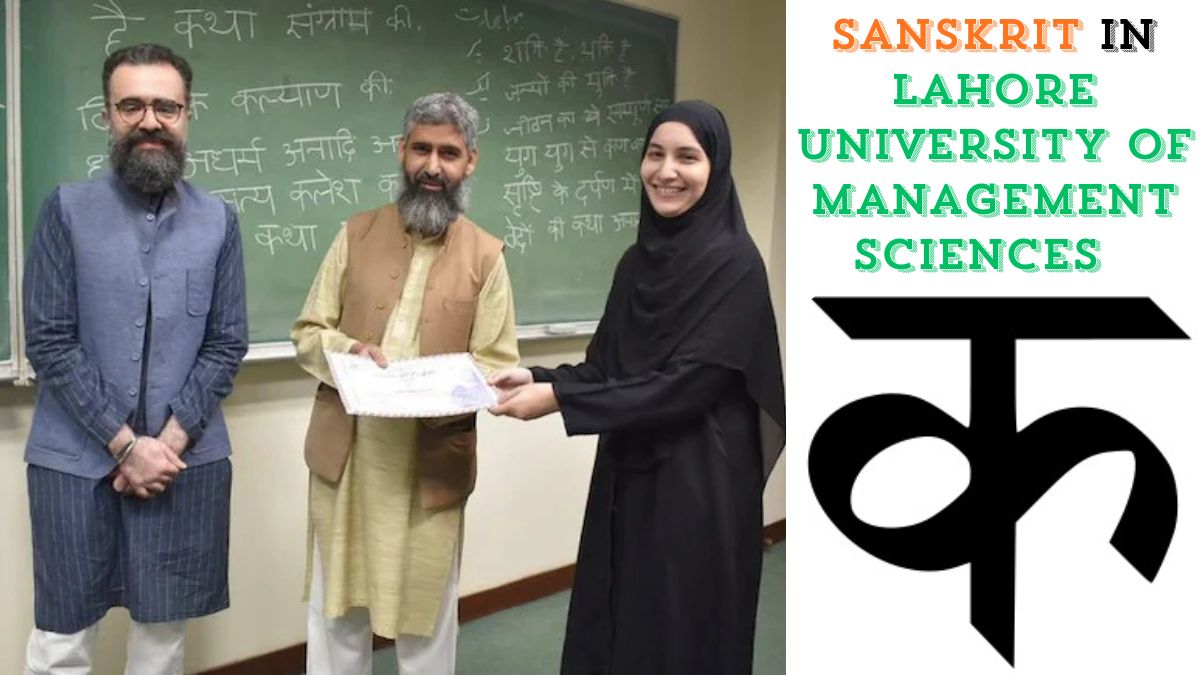
Sometimes, a piece of news touches the heart. Such a story has come from Pakistan, where a new academic beginning has taken place, breaking down walls erected many years ago. Sanskrit in Pakistani University is now not just a sentence, but a courageous step towards embracing a shared heritage. For the first time since Partition, Sanskrit is being formally taught in a university in Pakistan.
This initiative has been launched at Pakistan’s prestigious Lahore University of Management Sciences (LUMS), which has attempted to reconnect history and culture through education.
‘Sanskrit Belongs Not to One Religion’
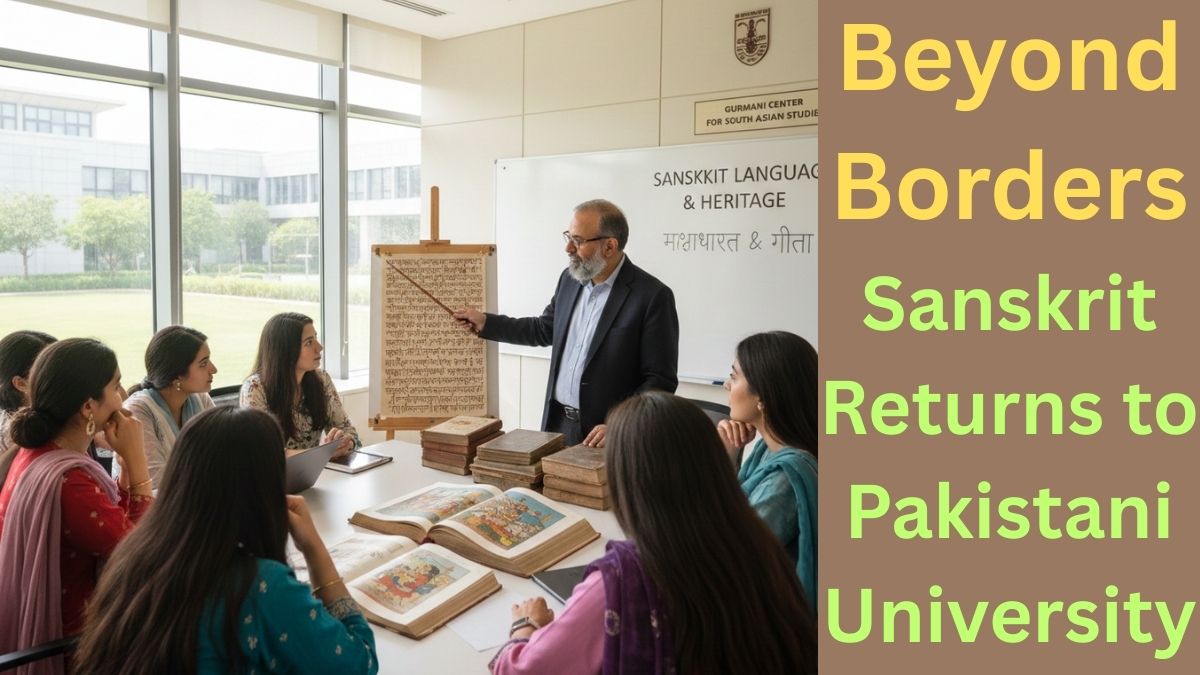
Professor Shahid Rashid, who started this course, believes that Sanskrit has been the shared language of the entire subcontinent. According to him, people often ask why Sanskrit should be taught in Pakistan, when the question should be why not?
He states that the great scholar Panini was associated with this region, and a rich intellectual tradition existed on this land during the time of the Indus Valley Civilization. Understanding the language is like understanding one’s own history.
ALSO READ | Elon Musk’s Bold Acknowledgement: America Has Benefitted Immensely from Indians
The Gita and the Mahabharata: A New Path for Study
Ali Usman Qasmi, Director of the Gurmani Center at LUMS, explains that many rare Sanskrit manuscripts were cataloged by the scholar J.C.R. Woolner in the 1930s, but no local work has been done on them since 1947.
The goal now is to train Pakistani students in the language so that local scholars can conduct research on texts like the Gita and the Mahabharata in the future. Qasmi hopes that this dream will be realized within the next 10–15 years.
The Journey from Workshop to University Course
This initiative began as a simple three-month weekend workshop. Following unexpected student interest and positive feedback, it was converted into a four-credit university course. Currently, the number of students is limited, but the university believes that this interest will grow in the coming years and it can be transformed into a full one-year course by 2027.
Why This Initiative is Historic
- Formal study of Sanskrit in Pakistan for the first time since Partition.
- The possibility of academic research on the Mahabharata and the Gita.
- An attempt to embrace shared South Asian heritage.
- A new path for dialogue and understanding through education.
One Language, Many Hearts
The introduction of the language in Pakistani University reminds us that language and knowledge have no boundaries. This initiative shows that the future can be made better only by understanding the past. Perhaps this is the greatest victory of education.
Disclaimer :
This article is based on publicly available information. Changes in the curriculum, content, or timeline are possible. Readers are requested to confirm with official university announcements.

Dr. Bidyut Barun Sarmah, with 22+ years of experience in print, electronic, and digital media, holds an MA and PhD in Mass Communication and Journalism. He has worked with AIR, Doordarshan, and the Publication Division under the Ministry of Information and Broadcasting. A published author and researcher, Dr. Sarmah writes extensively in both Assamese and English. He was also awarded a prestigious fellowship by the Ministry of Culture, Government of India, for his study on journalistic literature—an achievement that highlights his depth of scholarship and contribution to media studies. At Nest of News, he leads the editorial team and contributes across diverse topics.