|
Getting your Trinity Audio player ready...
|
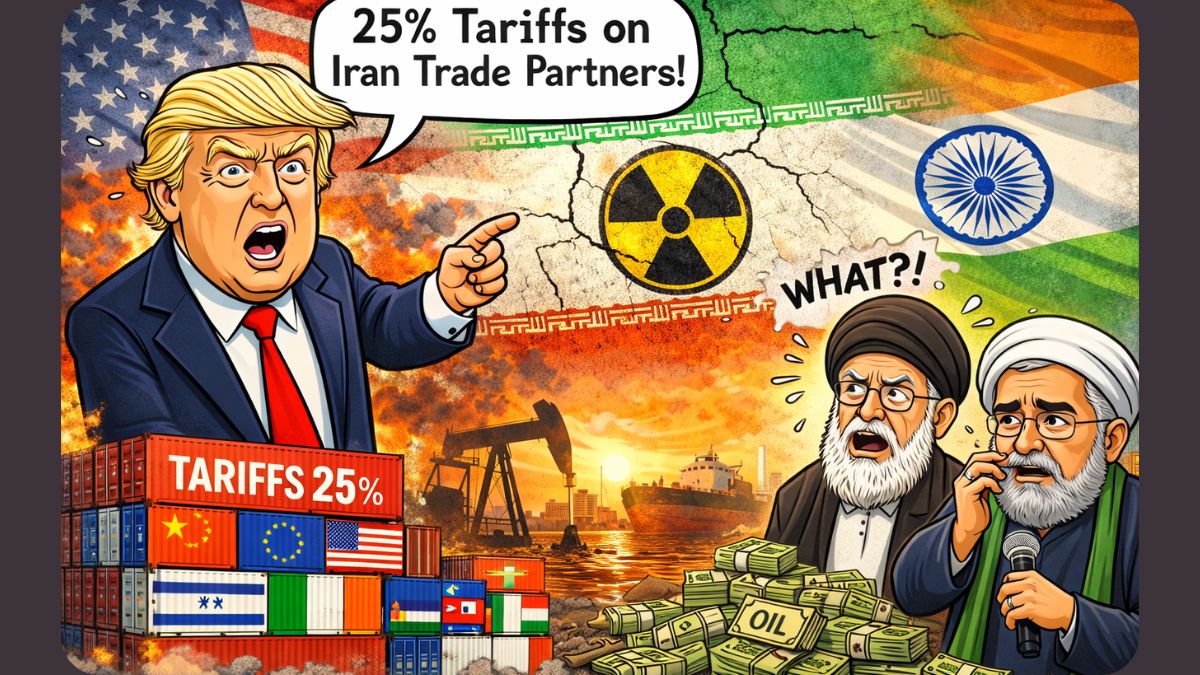
Amid the positive environment created by the US-India trade deal, US President Donald Trump has now warned of imposing fresh tariffs on countries that continue to trade with Iran. The announcement has stirred anxiety across financial markets and diplomatic corridors alike.
For India, the moment is layered with both opportunity and uncertainty. While recent trade understandings with the United States brought tariff relief for Indian exporters, the new global tension could complicate the picture.
What Does Trump’s tariff threat on Iran Trade Mean

The executive order refers to a possible 25 per cent tariff on nations that directly or indirectly import goods or services from Iran. The White House says the move aims to pressure Iran over its nuclear programme and regional activities.
More than 100 countries maintain some form of trade with Iran. China alone imported over 14 billion dollars’ worth of goods from Iran in the most recent reported year. If the United States enforces such tariffs strictly, global trade flows could shift dramatically.
ALSO READ |Trump-Modi Deal Sparks Historic Market Rally, But Broker Glitches Leave Traders Frustrated
India’s Strategic Balancing Act
India has historically sourced energy from Iran, though imports declined after earlier US sanctions. Now, with the Trump Tariffs Threat on Iran Trade back in focus, New Delhi must once again walk a fine diplomatic line between energy security and strategic ties with Washington.
At the same time, India recently benefited from reduced US tariffs on selected exports. Sectors such as textiles, engineering goods, and select agricultural products saw improved market access. This development boosted optimism among exporters and investors.
However, trade agreements often come with trade-offs.
Import Duty Debate and Opposition Concerns
Another dimension has now entered the national conversation. As part of recent trade understandings, India is expected to lower or phase out import duties on several goods coming from the United States. While this may strengthen bilateral ties and reduce costs for certain industries, critics argue that domestic manufacturers could feel pressure.
Opposition leaders have raised pointed questions
- Will reduced import duties hurt small and medium enterprises
- Could cheaper imports impact local manufacturing and jobs
- Is India conceding too much in pursuit of strategic alignment
Supporters of the agreement argue that lower import duties can increase competition, improve quality standards, and ultimately benefit consumers through lower prices. They believe integration into global supply chains is essential for India’s long-term growth.
The truth may lie somewhere in between. Trade liberalisation can create efficiency, but it also demands strong domestic safeguards and policy support for vulnerable sectors.
ALSO READ |WhatsApp’s Privacy Policy Faces Supreme Court Heat, Big Relief for Common Citizens
A Changing Global Economic Landscape

Beyond India, the broader concern is whether the world is heading toward a more fragmented trade system. If countries resist US pressure and continue trading with Iran, alternative economic groupings could gain strength. This could reshape alliances and supply chains.
Oil prices remain another sensitive factor. Even a modest increase in crude prices can widen India’s trade deficit and fuel inflation. For ordinary households, that means potential strain on monthly budgets.
Diplomacy at a Crossroads
Interestingly, this tariff warning comes as US and Iranian officials engage in talks in Oman. Early signals suggest a constructive start. If diplomacy succeeds, the tariff threat may remain a bargaining tool. If not, tensions in the Middle East could intensify further.
Iran’s economy is already facing serious challenges, with food inflation reportedly above 70 percent. Any escalation could deepen economic distress in the region and affect global markets.
ALSO READ |Elon Musk Crosses $800 Billion Mark Amid Separate Investigation Into X in France
Conclusion
Trump Tariffs Threat on Iran Trade has created a moment of global uncertainty. For India, it is both a strategic opportunity and a domestic political test. Recent tariff relief from the US has opened doors, but potential import duty reductions and global realignments add complexity.
As debates intensify at home and negotiations continue abroad, India’s ability to balance diplomacy, economic reform, and domestic interests will define its path in this evolving global order.
Disclaimer:
This article is based on publicly available international news reports, official statements, and ongoing public discussions. It is intended solely for informational purposes. Readers should refer to official government releases and verified sources for final decisions and policy updates.

Dr. Bidyut Barun Sarmah, with 22+ years of experience in print, electronic, and digital media, holds an MA and PhD in Mass Communication and Journalism. He has worked with AIR, Doordarshan, and the Publication Division under the Ministry of Information and Broadcasting. A published author and researcher, Dr. Sarmah writes extensively in both Assamese and English. He was also awarded a prestigious fellowship by the Ministry of Culture, Government of India, for his study on journalistic literature—an achievement that highlights his depth of scholarship and contribution to media studies. At Nest of News, he leads the editorial team and contributes across diverse topics.