
|
Getting your Trinity Audio player ready...
|
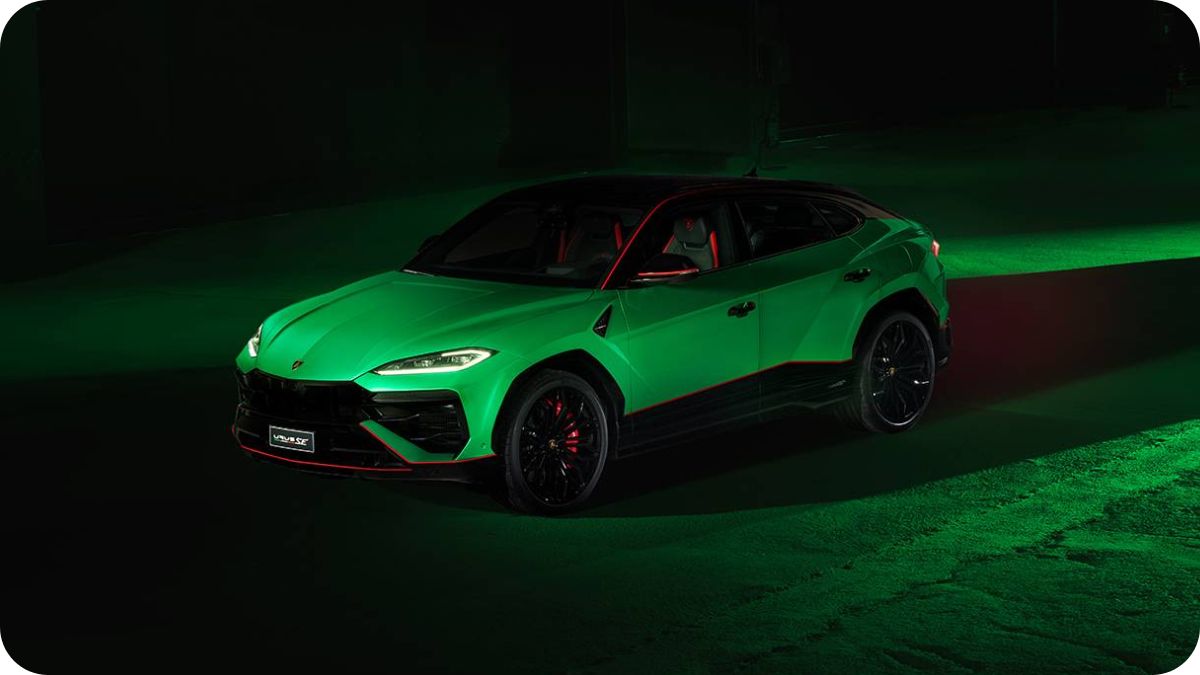
There is a moment when you first look at the Lamborghini Urus SE Tettonero Capsule, where your brain tries to process it rationally. It attempts to ask sensible questions about practicality, running costs and whether you really need 800 horsepower to collect children from school. And then your eyes take over, and the rational part of your brain quietly sits down and stops talking.
This is what Lamborghini does. It has been doing it since 1963. And at Milano Design Week 2026, the Italian manufacturer did it again with something that feels less like a new car and more like a statement of intent wrapped in carbon fibre, electrified fury and an almost offensive number of colour options.
The Urus SE Tettonero Capsule is limited to just 630 units. If you were hoping to think about it slowly, you may have already missed your chance.
What Tettonero Actually Means and Why It Matters
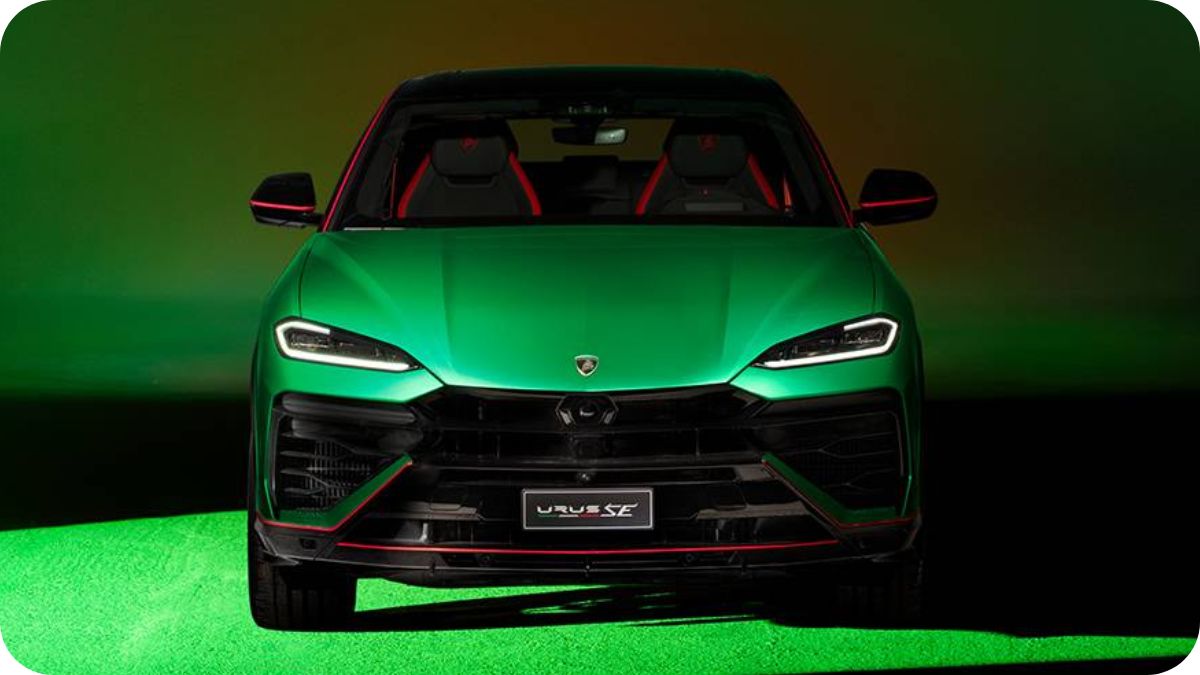
The name Tettonero translates to black roof in Italian, and that Nero Shiny upper section is exactly what your eyes find first. It cuts across the body of the car like a perfectly tailored suit jacket, sharp and deliberate, giving the Urus a split personality before you have even opened the door.
Below that black crown sits a colour palette that feels less like a car configurator and more like an art commission. Six body colours are available, including two shades making their Urus debut, Giallo Tenerife and Verde Mercurius. External liveries come in options like Rosso Mars and Verde Mantis. With over 70 possible configurations to choose from, no two Tettonero units ever need to look the same. That is not a selling point. That is a philosophy.
Carbon fibre appears exactly where it should, on the diffusers, splitters, dashboard, centre tunnel and door panels, both decorating the car and making a quiet declaration about the kind of machine this is. Brake callipers come in six colours. Wheels range from 21 to 23 inches, the latter being a size that raises eyebrows and lowers lap times simultaneously. The number 63 can be worn on the doors as a nod to the year Lamborghini was born, which is the kind of detail that separates a car with history from a car that merely has a price tag.
ALSO READ |Geely Has Stunned the World with a Car That Runs 45 Kilometres on One Litre of Petrol
Step Inside, and the Theatre Gets Louder
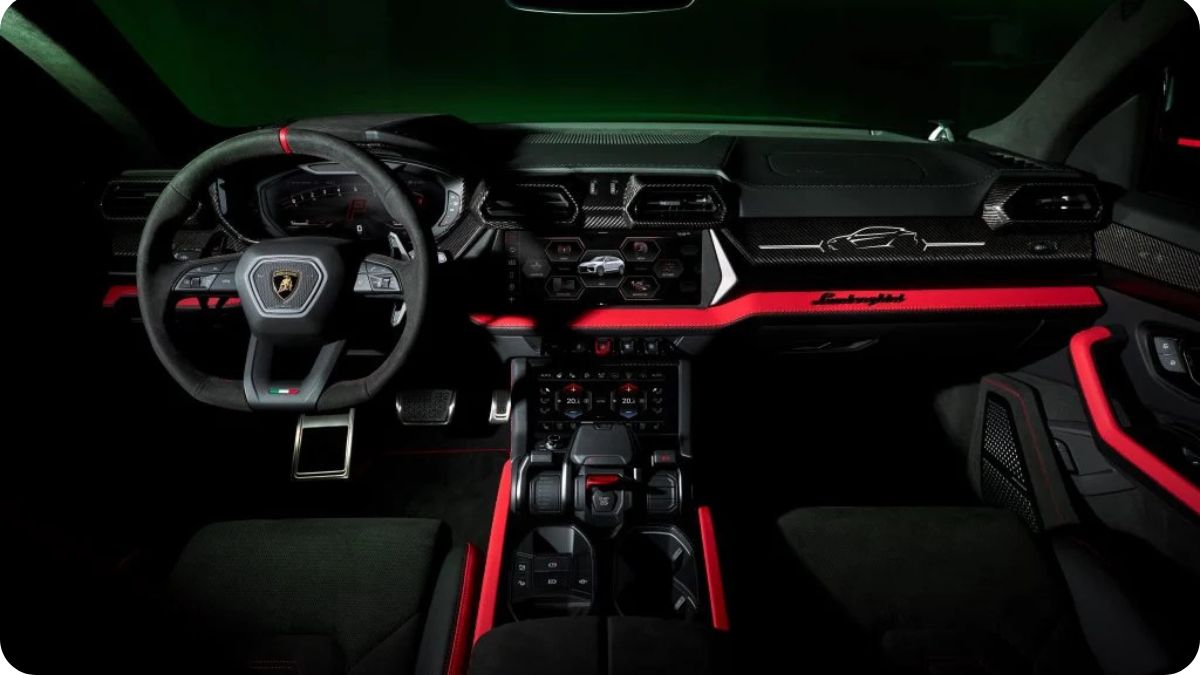
The interior of the Lamborghini Urus SE Tettonero Capsule does not let you breathe normally. Nero Ade sets the dominant tone, but contrast shades like Viola Acutus, Arancio Dryope and Verde Viper push back against any temptation toward subtlety.
Twelve embroidery options sit alongside Dinamica leather and Corsa-Tex microfiber, materials that sound like characters in a very stylish novel and feel like they were chosen by people who take stitching as seriously as engineering.
Every surface has been considered. Every panel has been finished with the kind of attention that makes you feel slightly guilty about touching anything. This is not an interior. It is a curated environment, which is a phrase that sounds like marketing until you actually sit in one and realise it is simply the truth.
800 CV and the Audacity to Also Be a Hybrid
Here is where the Lamborghini Urus SE Tettonero Capsule earns its place in the conversation beyond design and personalisation. A 4.0 litre twin-turbo V8 works alongside a permanent magnet synchronous electric motor and a 25.9 kWh battery to produce a combined 800 CV and 950 Nm of torque. The result is 0 to 100 km/h in 3.4 seconds, 0 to 200 km/h in 11.2 seconds and a top speed of 312 km/h.
These are numbers that would demand respect in a dedicated supercar. In an SUV that also seats five people and handles daily driving without complaint, they are almost unreasonable. And yet the hybrid system quietly adds another dimension, allowing over 60 kilometres of pure electric driving when the mood calls for silence rather than spectacle.
The car whispers when it wants to and roars when you ask it to. That dual personality should feel contradictory. Instead, it feels like exactly the kind of intelligence that justifies the price.
Underneath, a centrally mounted electronically controlled torque splitter continuously distributes power between the axles in partnership with a limited-slip rear differential.
Lamborghini describes the result as oversteer on demand, a phrase that sounds thrilling in a press release and is apparently just as thrilling when you are actually doing it. Pirelli P Zero tyres manage the performance load, with Scorpion Winter 2 options for colder climates, both built around Pirelli Elect technology designed specifically for hybrid systems.
ALSO READ |BMW F 450 GS Finally Arrives in India, and Adventure Riders Could Not Be More Excited
How the Tettonero Compares to Its Closest Rivals
The luxury performance SUV segment has grown into one of the most competitive spaces in the car world, and the Urus SE Tettonero does not arrive without serious company.
The Porsche Cayenne Turbo GT produces around 640 PS and reaches 100 km/h in approximately 3.3 seconds, making it fractionally quicker off the line. It is more precise, more measured and arguably easier to live with across the full breadth of daily driving.
But it does not carry 800 CV, does not offer an electric range and does not give you 70 ways to make it uniquely yours. It is the engineer’s choice. The Tettonero is the artist’s choice.
The Aston Martin DBX707 brings 707 PS and a grand touring character that leans into elegance and long-distance refinement. It is genuinely beautiful and drives with an emotional quality that few SUVs can match. But it is not a hybrid, it is not this configurable, and it does not arrive at Milano Design Week like it owns the room.
Where the Urus SE Tettonero wins is not a single specification. It wins on the complete experience, the way it looks, the way it sounds, the way it lets you make it entirely your own and the quiet knowledge that only 629 other people in the world will ever own the same car. In this segment, that kind of exclusivity is worth more than any single number on a spec sheet.
ALSO READ |Nissan Patrol Set to Shake India’s SUV Market as Iconic Beast Finally Arrives in 2027
Why Lamborghini Builds Cars Like This and Why the World Needs Them
There will always be voices that call a car like this unnecessary. Too powerful, too personalised, too expensive for what is ultimately still a vehicle that sits in traffic and needs its tyres rotated. Those voices are not entirely wrong. But they are missing something important.
Lamborghini has never built cars because the world needed more ways to get from one place to another. It builds cars because human beings need things that make them feel alive, that reward ambition, that celebrate the idea that craftsmanship, performance and beauty can exist together in one object without any of them compromising the others.
The Urus SE Tettonero Capsule was unveiled at Pirelli Hangar Bicocca in Milan, one of the most striking contemporary art spaces in Europe, and it did not look out of place. It looked like it belonged. Because at some level, this car is art. Functional, terrifyingly fast, extraordinarily personal art that happens to also do 312 km/h.
It does not try to be sensible. It was never going to be. It exists to push boundaries, to reward those who want more than the ordinary and to remind everyone watching that excess, when it is done with this much care, this much craft and this much conviction, is not a flaw.
It is the entire point.
Disclaimer:
This article is written for informational and general reading purposes only. All performance figures, specifications and design details mentioned are based on official information released by Lamborghini at Milano Design Week 2026. Availability, pricing and configurations may vary by market and region. Readers are advised to contact an authorised Lamborghini dealer for the most accurate and up to date information before making any purchase decisions.
Kangkan Kishor Sharma, an M.A. in Media and Journalism, serves as the Chief Contributor at NestOfNews.com. He contributes regularly, bringing insight, passion, and a deep commitment to delivering stories that truly matter. His work reflects a thoughtful understanding of media, storytelling, and the issues shaping today’s world.
1 thought on “Lamborghini Urus SE Tettonero Is Too Much Car for This World. That Is Exactly Why 630 People Will Fight Over It.”
Comments are closed.