|
Getting your Trinity Audio player ready...
|
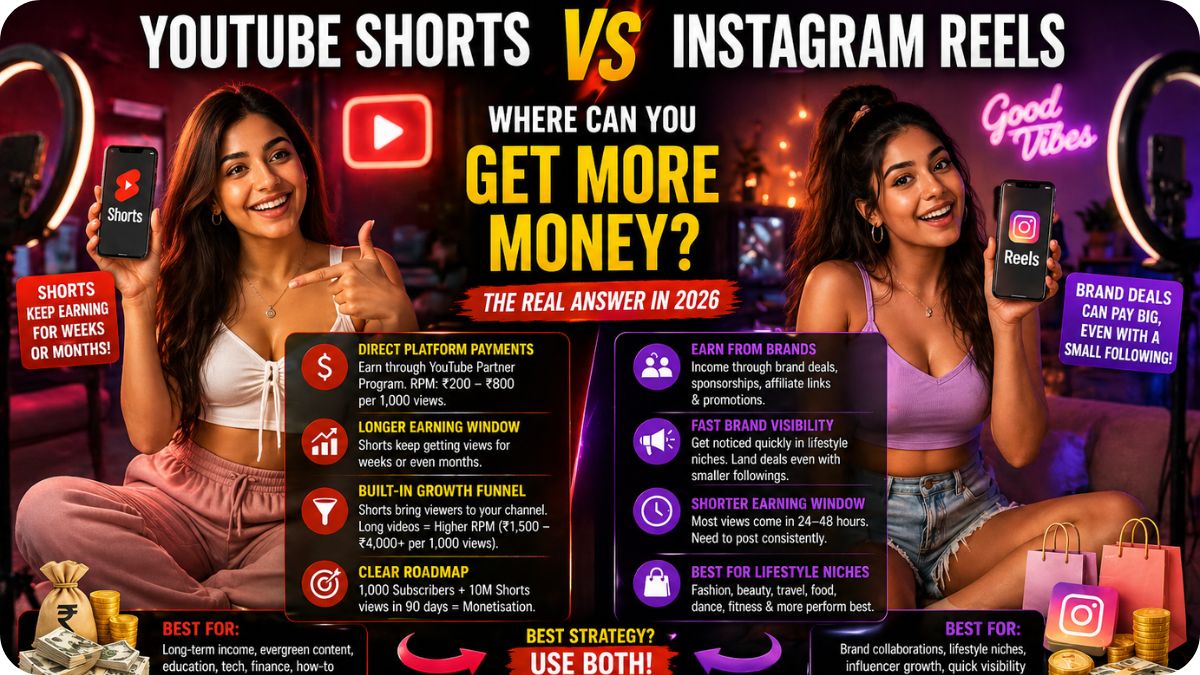
YouTube Shorts vs Instagram Reels: Where Can You Get More Money? that is the question keeping you up at night. You have a phone. You have ideas. And you have probably already lost sleep wondering whether to go all in on YouTube Shorts or Instagram Reels.
Everyone around you seems to have an opinion. Your friend says Reels blew up his cousin’s page overnight. A YouTube video you watched at midnight told you Shorts is the only platform that actually pays. And now you are sitting here, still confused, still not posting.
So let us settle it properly. YouTube Shorts vs Instagram Reels: Where can you get more money? Not a vague answer. A real one.
YouTube Shorts vs Instagram Reels: Where Can You Get More Money Through Direct Platform Payments?
If you are talking about money that comes directly from the platform, YouTube Shorts wins this round without much of a contest.
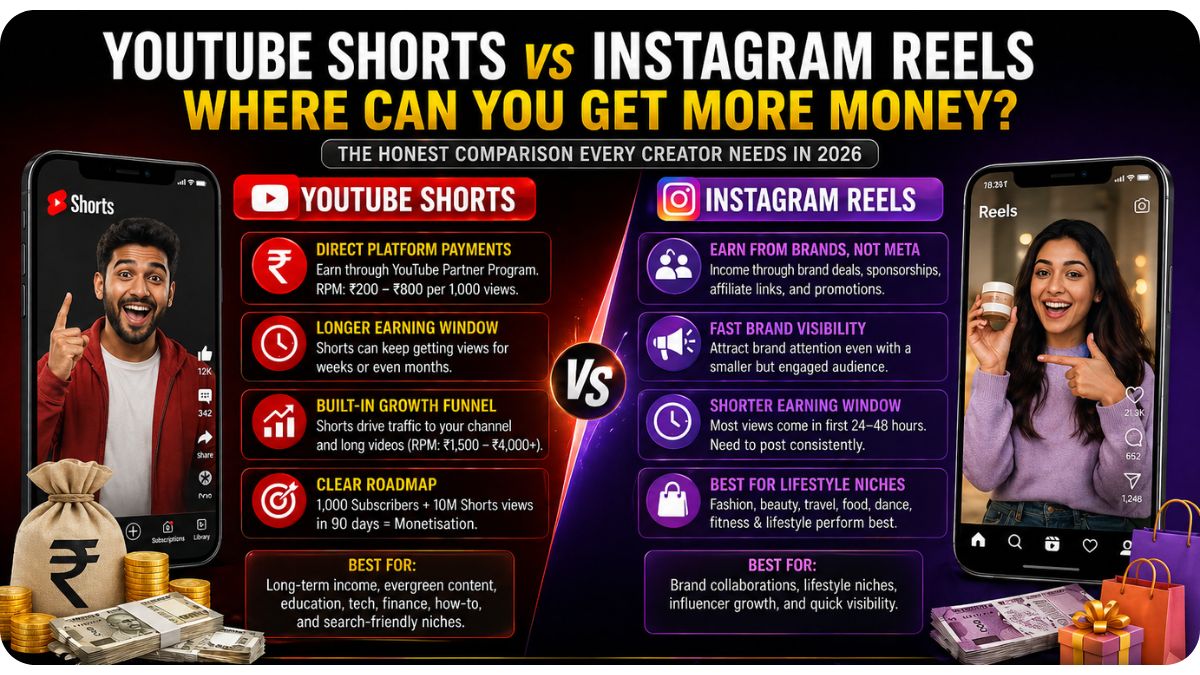
YouTube has a proper monetisation system built into its Partner Program. Once you cross 1,000 subscribers and hit 10 million Shorts views within 90 days, the door opens. After that, you earn a share of the ad revenue generated from your Shorts feed. RPM for Shorts typically falls between 200 and 800 rupees per thousand views, depending on your niche and where your viewers are located.
Instagram Reels does not offer anything close to this right now, especially in India. Meta rolled out a Reels bonus programme a while back, but it has been quietly pulled back in most markets. For the majority of Indian creators today, Instagram is simply not writing cheques based on view counts.
So, on direct platform income alone, YouTube Shorts is the clear answer to where you can get more money.
ALSO READ |Instagram Your Algorithm: Now Your Reels Will Show Exactly What Your Heart Wants to See
What Instagram Reels Offers Instead
That does not mean Instagram Reels is a dead end for earning. It just means the money flows differently here, and you need to understand that before you write off the platform entirely.
On Instagram, your income comes from people and brands, not from Meta itself. Sponsored posts, brand collaborations, affiliate links, paid promotions and gifting arrangements are the real revenue streams for Reels creators. A creator with 20,000 engaged followers in the right niche can earn more from a single brand deal than from months of Shorts ad revenue.
The catch is that this kind of income requires hustle. You have to build a profile that looks attractive to brands, pitch yourself, negotiate rates and manage relationships. It is income you chase rather than income that arrives automatically.
How Long Does Your Content Actually Earn?
This is a detail that changes everything, and most people never talk about it.
When you post a Reel on Instagram, its earning window is roughly 24 to 48 hours. That is when most of your views arrive. After that, the algorithm moves on, and your video fades into the feed. If you want to keep earning attention and stay relevant to brands, you have to keep posting almost every day.
YouTube Shorts behaves very differently. A good Shorts video can keep collecting views for weeks or even months after the upload date. The algorithm is more patient. It keeps serving your video to new audiences as long as people engage with it. That means a single strong video can keep working for you long after you have stopped thinking about it.
When you ask YouTube Shorts vs Instagram Reels, where can you get more money over time, this staying power is a big part of the answer.
The Hidden Income Stream That Makes YouTube Even Stronger
Here is something that genuinely surprises new creators when they discover it.
When someone watches your Short and enjoys it, they often check your channel. If you also have longer videos there, those get watched too. And longer YouTube videos earn at a significantly higher RPM than Shorts. Some creators report long-form RPM in the range of 1,500 to 4,000 rupees per thousand views, sometimes even higher in competitive niches like finance or technology.
So, posting Shorts is not just about Shorts income. It is a funnel that feeds your entire channel. Instagram Reels does not offer this kind of layered earning. A Reel viewer stays on Instagram, not on your profile specifically.
ALSO READ |Instagram Reels Brings AI Dubbing to 5 Indian Languages, Giving Regional Creators a Bigger Voice
Which Niche Decides Where You Earn More?
The YouTube Shorts vs Instagram Reels question of where you can get more money also depends heavily on what you actually make videos about.
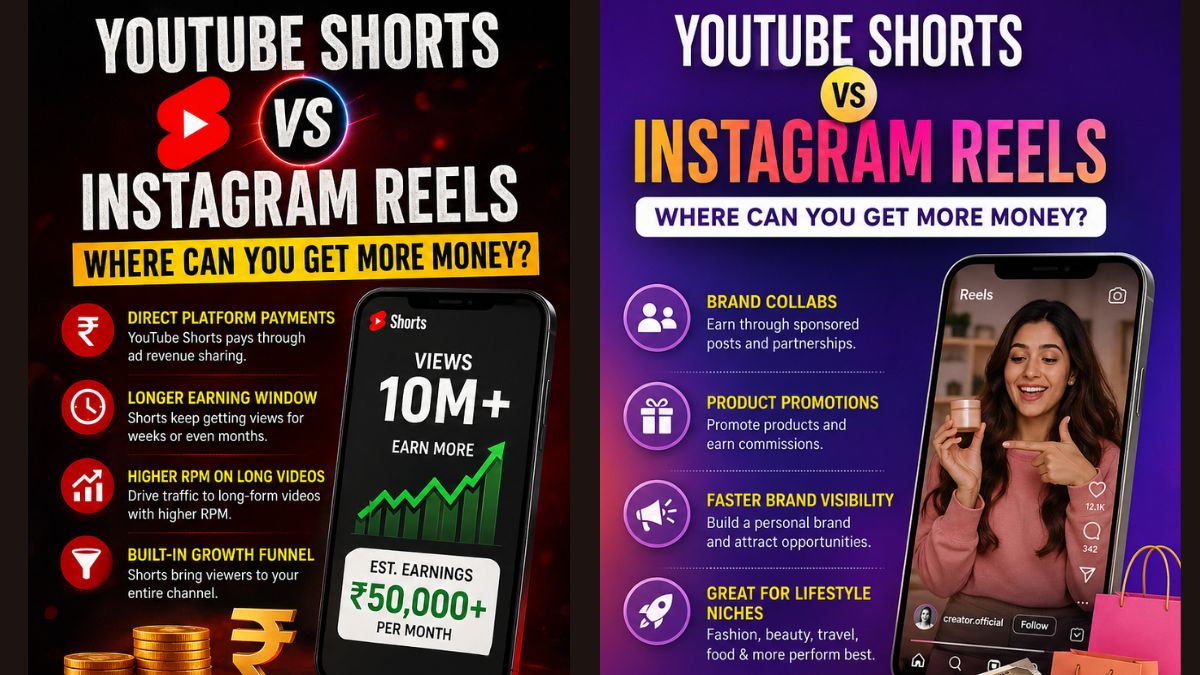
Fashion, beauty, dance, food styling, skincare, travel and lifestyle content performs exceptionally well on Instagram. Brands in these categories actively scout Reels creators and pay well for the right fit. If your content lives in any of these spaces, Instagram’s brand economy can be more rewarding than YouTube’s ad system, at least in the short term.
Education, technology, personal finance, cooking tutorials, career advice and how-to content thrives on YouTube. These topics have search intent behind them, meaning people actively look for this content and keep finding old videos. That means your earning potential on YouTube in these niches’ compounds quietly and steadily over time.
YouTube Shorts vs Instagram Reels: Where Can You Get More Money as a Complete Beginner?
If you are brand new with zero followers and zero subscribers, the honest answer is that neither platform will pay you anything for the first few months. That is just the truth.
YouTube requires you to hit real thresholds before any money flows. Instagram requires you to build an audience before any brand takes you seriously. Both demand patience, and both will test whether you are serious or just hoping to get lucky.
What YouTube Shorts offers a beginner that Instagram does not is a clearer roadmap. You know exactly what you are working toward. Hit 1,000 subscribers, hit 10 million views in 90 days, and the monetisation programme opens. There is a defined finish line, even if it takes a few months to reach it.
Instagram’s path to earning is less defined, which can feel liberating for some creators and completely disorienting for others.
The Strategy That Makes Both Work Together
The smartest thing a creator can do in 2026 is stop treating this as either/or. Shoot your video once. Edit it cleanly for a vertical format. Post it to YouTube Shorts and Instagram Reels on the same day. You reach two different audiences with the same effort, and you let both algorithms work in your favour simultaneously.
Over time, you will naturally see where your content resonates more. Maybe your cooking videos blow up on Instagram, but your product reviews quietly build a loyal YouTube audience. Follow the data and double down where the numbers reward you.
Give this strategy at least six months before drawing any conclusions. Three to six months of consistent posting is the honest minimum before either platform starts returning meaningful results.
ALSO READ |Instagram Encrypted Chats Ending in May 2026: Is Your Privacy at Risk?
So, YouTube Shorts vs Instagram Reels: Where Can You Get More Money?
If you want a stable, recurring income that grows over time without chasing brand deals every week, YouTube Shorts is where you can get more money. The monetisation system is structured, the earning window is longer, and the channel ecosystem creates multiple income layers from a single piece of content.
If you want faster brand visibility, a strong presence in lifestyle niches, and the chance to land sponsored deals before you have a massive subscriber count, Instagram Reels is a genuinely powerful tool, just not a passive income machine.
The real answer is both. Start on YouTube Shorts for the foundation. Build on Instagram Reels for the reach. And keep making better videos every single week, because on both platforms, quality is still the only thing the algorithm truly rewards in the long run.
Disclaimer:
This article is written for general informational and educational purposes only. All earning figures, RPM estimates and platform policy details mentioned are based on publicly available industry data and creator reports at the time of writing. Monetisation eligibility, bonus programmes and revenue-sharing models are subject to change by YouTube and Meta without prior notice. This content does not constitute financial or professional advice. Readers are encouraged to refer to the official support pages of YouTube and Instagram for the most current and accurate information before making any content or business decisions.
Paban Kotoky, an MCA by qualification, serves as the Technical Head & Contributor at NestOfNews.com. He manages the overall technical operations of the platform and also contributes regularly, sharing his expertise on technology and emerging digital trends.
1 thought on “YouTube Shorts vs Instagram Reels: Where Can You Get More Money Faster?”
Comments are closed.